RBQ 15.1 Exam Preparation — Owner-Builder for Forced-Air Heating Systems | Prof-RBQ.ca
Complete Strategic Guide: Obtaining the RBQ 15.1 Licence – Owner-Builder for Forced-Air Heating Systems
1. What Is the RBQ 15.1 Licence and Who Needs It?
The RBQ 15.1 licence — Owner-Builder for Forced-Air Heating Systems (Constructeur-propriétaire en systèmes de chauffage à air pulsé) — is a specialized licence issued by the Régie du bâtiment du Québec (RBQ) for contractors who install, maintain and commission forced-air heating systems. It authorizes construction work reserved to master pipe mechanics involving:
- Oil-fired forced-air furnaces — installation, fuel piping, oil storage tanks and combustion venting per CAN/CSA B139;
- Natural gas and propane forced-air furnaces — installation, gas piping, regulators and venting per CAN/CSA-B149.1;
- Combined heating and air conditioning systems — forced-air systems that provide both heating and cooling;
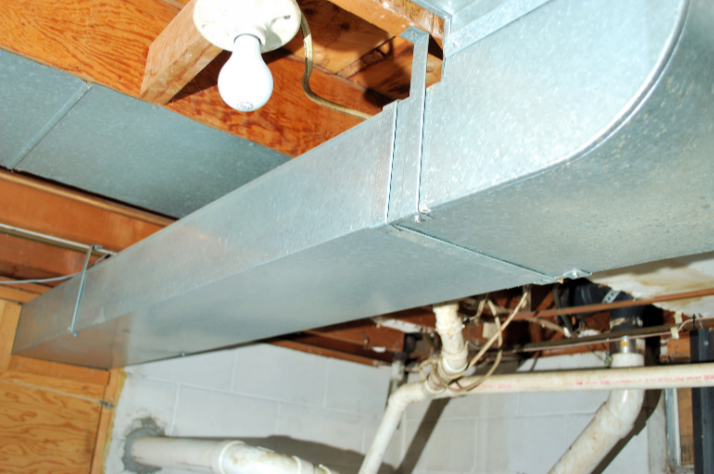
- Heat distribution ductwork — sizing, layout, installation and balancing of supply and return air ducts;
- Combustion and dilution air supply — sizing of openings and ducts for combustion air, including systems above 400,000 BTU/h;
- Flue gas venting — vent connectors, vent pipes, chimneys and draft requirements.
With 106 skills across 4 modules and 18 competency elements, the RBQ 15.1 is one of the most comprehensive exams in category 15. It covers all three fuel types (oil, gas, propane) in a single licence, requiring mastery of two distinct installation codes and their associated calculation methods.
2. Scope of the Licence: Three Fuels, One Delivery System
The RBQ 15.1 covers the installation, commissioning and maintenance of forced-air heating systems — systems that heat air in a furnace and distribute it through a ductwork network to the building's occupied spaces. What makes this licence distinctive is that it covers all three combustion fuels — oil (CAN/CSA B139), natural gas (CAN/CSA-B149.1) and propane (CAN/CSA-B149.1) — under a single exam, requiring candidates to master two different installation codes simultaneously.
The forced-air system is a complete chain from fuel supply to conditioned air delivery: fuel storage and supply (oil tanks with clearance and burial requirements, gas meter and regulator connections), fuel piping (sizing based on appliance input, pressure testing, purging procedures), the furnace (heat exchanger, burner, blower, controls), combustion air supply (sizing of openings and ducts — with a critical 400,000 BTU/h threshold that changes the calculation method), flue gas venting (vent connectors, vent pipes, chimneys — all with code-specific sizing requirements), and the distribution system (supply and return ducts sized to deliver the correct air volume to each room).
A distinctive feature of the RBQ 15.1 is the calculation intensity — with approximately 14 calculation-based skills, candidates must perform heat loss/gain calculations per CAN/CSA F280, duct sizing calculations, fuel piping sizing, combustion air calculations, vent pipe sizing, and unit conversions. The CAN/CSA F280 standard (closed book) is the foundation for determining heating and cooling equipment capacity.
3. RBQ Exam Format: What to Expect
- Question type: Multiple choice (MCQ)
- Duration: 3 hours (180 minutes)
- Passing grade: 60%
- Languages: French or English
- Skills assessed: 106 skills across 18 competency elements
- Exam type: Mixed (4 open-book documents + 5 closed-book documents)
- Tools provided: Calculator, ruler, paper and pencil
With 106 skills and approximately 14 calculation-based questions, the RBQ 15.1 is one of the most demanding exams in the RBQ system. The calculator is essential — expect to use it extensively for heat loss, duct sizing and piping calculations.
4. Exam Documentation: Open Book vs. Closed Book
The RBQ 15.1 exam is a mixed exam with 4 documents provided (open book) and 5 to memorize (closed book) — 9 documents total.
Documents PROVIDED During the Exam (Open Book)
- Quebec Construction Code, Chapter I — Building, and National Building Code — Canada 2010 — Contains the building requirements for heating system installations, including fire separations, clearances and structural provisions.
- CAN/CSA B139 Series F-19 — Installation Code for Oil-Burning Equipment — The central reference for oil-fired appliance installation, oil storage, fuel piping, combustion air and venting for oil systems.
- CAN/CSA-B149.1-15 — Natural Gas and Propane Installation Code — The central reference for gas-fired appliance installation, gas piping, combustion air and venting for natural gas and propane systems.
- CMMTQ Combustion Efficiency Tables — Reference tables for combustion efficiency measurements and adjustments used during system commissioning.
Documents to MEMORIZE (Closed Book)
- Building Act (R.S.Q., c. B-1.1) — The foundational statute governing construction, safety, and contractor qualifications in Quebec.
- CAN/CSA F280-F12 — Determining the Required Capacity of Residential Space Heating and Cooling Appliances — The standard for calculating building heat loss and gain to determine furnace and air conditioning sizing.
- Forced-Air Heating and Air Conditioning Systems (CMMTQ) — The CMMTQ publication covering forced-air system design, ductwork sizing, air distribution and system balancing.
- Heat Loss and Gain Calculations (CMMTQ) — The CMMTQ publication detailing the methods for calculating building heat loss and gain used in conjunction with CAN/CSA F280.
- Canadian Oil Heating Manual — The comprehensive manual covering oil heating system installation, maintenance, troubleshooting and efficiency optimization.
5. The 4 Training and Competency Modules
Module 1 — Definitions and Types of Systems
Covers the foundational knowledge of forced-air heating: types of furnaces (oil-fired, gas-fired, propane-fired, combination heating/cooling units), system components (heat exchanger, burner, blower, filter, humidifier, electronic air cleaner, cooling coil), types of forced-air distribution systems (extended plenum, reducing plenum, radial, perimeter loop), fuel types and their combustion characteristics, and the distinction between conventional and high-efficiency (condensing) furnaces. Also covers the types of oil storage tanks (above-ground, underground) and gas supply systems.
Module 2 — Legislative, Normative and Regulatory Framework
Covers the regulatory framework for forced-air heating: the Building Act, the Quebec Construction Code (Chapters I and II), the Safety Code (Chapter III — Gas), the CAN/CSA B139 code for oil equipment, the CAN/CSA-B149.1 code for gas and propane, the CAN/CSA F280 standard for heating/cooling capacity determination, ASHRAE standards, the CMMTQ publications, and the Occupational Health and Safety Act. This module tests the candidate's understanding of which code applies to which fuel type and when.
Module 3 — Plan Reading
Covers the ability to read and interpret HVAC plans and specifications: floor plans showing duct layouts, equipment schedules specifying furnace and air conditioning specifications, detail drawings showing vent connector and chimney configurations, fuel piping diagrams, combustion air supply drawings, and specifications for ductwork materials and dimensions. This module tests the candidate's ability to extract installation requirements from architectural and mechanical drawings.
Module 4 — Standards and Work Execution
The most heavily weighted module on the exam. This module covers the full installation workflow: heat loss and gain calculations per CAN/CSA F280, equipment sizing and selection, duct sizing and fan calculations, oil storage tank installation (clearances, burial, capacity limits), fuel piping installation (sizing, pressure testing, purging), combustion air supply (sizing openings and ducts — with the critical 400,000 BTU/h threshold), flue gas venting (vent connector sizing, vent pipe sizing, chimney requirements), initial start-up procedures (including appliances over 1,000,000 BTU/h), combustion efficiency testing using the CMMTQ tables, system balancing, and health and safety.
6. Key Competencies and Technical Requirements (Official Context)
Heat Loss and Gain Calculations: CAN/CSA F280
The CAN/CSA F280 standard is the foundation for forced-air system sizing — and it must be memorized (closed book). The standard provides the methodology for calculating how much heat a building loses in winter (heating load) and how much heat it gains in summer (cooling load). The exam tests candidates on the complete calculation chain: identifying the design temperatures (outdoor and indoor), calculating heat loss through each building component (walls, windows, doors, ceilings, floors — each with their own thermal resistance values), adding infiltration losses (air leakage through the building envelope), and summing the results to determine the total heating capacity required in BTU/h. The furnace output must match or exceed this calculated load. Candidates must also understand the difference between furnace input (fuel consumption) and furnace output (useful heat delivered), linked by the furnace's AFUE (Annual Fuel Utilization Efficiency).
Combustion Air Supply: The 400,000 BTU/h Threshold
Combustion air supply is one of the most critical — and most tested — topics on the RBQ 15.1 exam. Every fuel-burning appliance needs air for combustion, and the codes specify exactly how this air must be provided. The exam focuses heavily on the 400,000 BTU/h threshold: below this value, combustion air can be supplied through a building's natural infiltration (with specific conditions); above this value, dedicated combustion air openings or ducts must be provided. The exam tests the sizing calculations for these openings (square inches per 1,000 BTU/h of input), the placement requirements (one opening near the ceiling, one near the floor), and the differences between confined and unconfined spaces. Both CAN/CSA B139 and CAN/CSA-B149.1 have combustion air provisions — candidates must know both sets of rules.
Oil Storage: Clearances, Burial and Capacity
CAN/CSA B139 dedicates significant sections to oil storage — and the exam reflects this emphasis. For above-ground tanks, the exam tests clearance requirements (distance from appliances, walls, ceilings, and building openings), the maximum capacity permitted inside a building (varies by tank location), and the requirements for tank supports and fire protection. For underground tanks, the exam tests burial depth, backfill requirements, corrosion protection, piping connections (anti-siphon devices, fill and vent pipes), and leak detection. The exam also tests the candidate's ability to calculate the maximum storage capacity allowed in a given configuration — a calculation skill that combines code knowledge with arithmetic.
Fuel Piping: Two Codes, Two Sets of Rules
Because the RBQ 15.1 covers both oil and gas systems, candidates must master fuel piping requirements from two different codes. For oil piping (CAN/CSA B139), the exam tests pipe sizing based on appliance input and pipe length, the types of fittings and connections permitted, pressure testing procedures, and the purging procedure for removing air from oil lines. For gas piping (CAN/CSA-B149.1), the exam tests pipe sizing using the longest-run method (based on total connected BTU/h load and pipe length), the materials and connections permitted for gas piping, pressure testing at 1.5× operating pressure, and the purging procedure for removing air from gas lines before ignition. Confusing the requirements between the two codes is a common exam pitfall.
Flue Gas Venting: Vent Connectors, Vent Pipes and Chimneys
Venting combustion gases safely is a core competency tested across multiple competency elements. The exam covers the three components of the venting system: vent connectors (the pipe from the appliance to the vent pipe or chimney — tested for size, slope, length and material), vent pipes (the vertical section that creates draft to exhaust combustion gases — tested for size, height, termination requirements and clearances from combustibles), and chimneys (masonry or factory-built, tested for sizing, liner requirements and termination height). For high-efficiency condensing furnaces, the venting requirements are completely different — these use plastic pipe (PVC or CPVC) vented through a sidewall, and the exam tests the specific requirements for sidewall venting (clearances from windows, doors, air intakes and property lines).
Duct Sizing and Air Distribution
The forced-air distribution system must deliver the correct volume of conditioned air to each room — and the exam tests the complete sizing process. Starting from the calculated heat loss/gain for each room, the candidate must determine the required air volume (CFM), then size the supply duct to deliver that volume at an acceptable velocity and static pressure. The exam tests duct sizing methods (equal friction, static regain), the use of friction loss charts, the sizing of return air ducts, and the selection of registers and grilles (throw, spread, face velocity). Fan calculations include determining the required external static pressure (sum of duct friction losses, fitting losses, filter losses and coil losses) and selecting a fan that can deliver the required CFM at that pressure.
7. Preparation Strategy and Tips for Success
The RBQ 15.1 exam covers 106 skills across 4 modules with 4 open-book and 5 closed-book documents. Here is a recommended strategy:
Phase 1 — Master the two installation codes (both provided at the exam). CAN/CSA B139 (oil) and CAN/CSA-B149.1 (gas/propane) are the two most important open-book references. Focus on learning where the key requirements are located — oil storage, fuel piping sizing tables, combustion air provisions, and venting requirements — so you can find them quickly during the exam.
Phase 2 — Memorize CAN/CSA F280 and the CMMTQ publications. These are the closed-book documents that form the foundation for heat loss/gain calculations and duct sizing. Focus on the calculation methodology — the steps, the formulas, and the variables you need. Use Prof-RBQ.ca's step-by-step exercises to practise these calculations until they become automatic.
Phase 3 — Master the calculation skills. With approximately 14 calculation-based skills, you must be comfortable with heat loss calculations, duct sizing, fuel piping sizing, combustion air opening sizing, and vent pipe sizing. Practise each type of calculation repeatedly — the exam provides a calculator, but you must know which formulas to apply.
Phase 4 — Memorize the Building Act and the Canadian Oil Heating Manual. The Building Act is common to all RBQ licences. The Canadian Oil Heating Manual is the comprehensive reference for oil-specific installation, maintenance and troubleshooting — focus on the key provisions that differ from the gas code.
Phase 5 — Complete full timed simulations. With 106 skills and 4 open-book documents, you have roughly 102 seconds per question. Practice navigating between CAN/CSA B139, CAN/CSA-B149.1, the Construction Code and the CMMTQ tables under timed conditions.
Frequently Asked Questions
What is the RBQ 15.1 licence — Owner-Builder for Forced-Air Heating Systems?
The RBQ 15.1 licence authorizes construction work reserved to master pipe mechanics involving forced-air heating systems. It covers oil, natural gas and propane systems, including forced-air systems that provide both heating and air conditioning. It includes the work of subcategory 15.1.1 and related construction work. Prof-RBQ.ca offers a comprehensive course covering the 4 modules and 106 skills assessed on the exam.
How long is the RBQ 15.1 forced-air heating systems exam?
The RBQ 15.1 — Owner-Builder for Forced-Air Heating Systems exam lasts 3 hours (180 minutes). It is a multiple-choice exam covering 106 skills. Prof-RBQ.ca helps you manage your time effectively with timed exam simulations.
What is the passing grade for the RBQ 15.1 exam?
The passing grade for the RBQ 15.1 exam is 60%. Questions cover 4 modules: definitions and types of systems, legislative framework, plan reading, and standards and work execution. Prof-RBQ.ca targets each module with specific practice questions to maximize your chances of success.
Is the RBQ 15.1 exam open book or closed book?
The RBQ 15.1 exam is a mix of open book and closed book: 4 documents are provided at the exam (open book) and 5 documents must be memorized (closed book). The provided documents include the Quebec Construction Code Chapter I, CAN/CSA B139, CAN/CSA-B149.1-15 and the CMMTQ Combustion Efficiency Tables. The documents to memorize include the Building Act, CAN/CSA F280, and three CMMTQ and Canadian Oil Heat Association publications.
What documents are provided during the RBQ 15.1 exam?
Four documents are provided at the RBQ 15.1 exam: (1) the Quebec Construction Code, Chapter I — Building, and the National Building Code — Canada 2010, (2) CAN/CSA B139 Series F-19 — Installation Code for Oil-Burning Equipment, (3) CAN/CSA-B149.1-15 — Natural Gas and Propane Installation Code, and (4) the CMMTQ Combustion Efficiency Tables. Prof-RBQ.ca trains you to navigate these references quickly.
What documents must I memorize for the RBQ 15.1 exam?
Five documents must be memorized (closed book) for the RBQ 15.1 exam: (1) the Building Act (R.S.Q., c. B-1.1), (2) CAN/CSA F280-F12 — Determining the Required Capacity of Residential Space Heating and Cooling Appliances, (3) Forced-Air Heating and Air Conditioning Systems (CMMTQ), (4) Heat Loss and Gain Calculations (CMMTQ), and (5) the Canadian Oil Heating Manual. Prof-RBQ.ca offers flashcards and targeted quizzes to master these contents.
How many modules and skills are assessed on the RBQ 15.1 exam?
The RBQ 15.1 exam covers 4 modules, 18 competency elements and 106 skills — one of the most comprehensive exams in category 15. The modules are: (1) Definitions and Types of Systems, (2) Legislative, Normative and Regulatory Framework, (3) Plan Reading, and (4) Standards and Work Execution. Prof-RBQ.ca structures its lessons around each of these modules.
Can I take the RBQ 15.1 exam in English?
Yes, the RBQ 15.1 — Owner-Builder for Forced-Air Heating Systems exam can be taken in French or English, according to your preference. Prof-RBQ.ca offers bilingual content to help you prepare in the language of your choice.
What CSA standards apply to forced-air heating systems in Quebec?
Several CSA standards apply: CAN/CSA B139 for oil-burning equipment, CAN/CSA-B149.1 for natural gas and propane, and CAN/CSA F280 for determining heating and cooling capacity. The Quebec Construction Code (Chapters I and II) and the Safety Code (Chapter III, Gas) frame these standards. ASHRAE standards complement the technical framework. Prof-RBQ.ca integrates all these references into its practice questions.
How can I best prepare for the RBQ 15.1 forced-air heating exam?
To best prepare: (1) study the official competency profile and its 106 skills, (2) memorize the 5 closed-book documents — particularly the Building Act, CAN/CSA F280 and the CMMTQ publications, (3) familiarize yourself with the 4 codes provided at the exam, and (4) practise with Prof-RBQ.ca's quizzes and simulations that reproduce actual exam conditions.
What types of calculations are required on the RBQ 15.1 exam?
The RBQ 15.1 exam includes approximately 14 calculation skills: building heat loss calculations, duct sizing and fan calculations, fuel piping sizing, dimensions of combustion air openings and ducts (400,000 BTU/h threshold), sizing of vent connectors and vent pipes, surface and volume calculations, imperial/metric unit conversions, and maximum oil storage capacity. Prof-RBQ.ca offers step-by-step exercises to master each of these calculations.
What is the format of the questions on the RBQ 15.1 exam?
The RBQ 15.1 exam consists exclusively of multiple-choice questions (MCQ). Questions cover the 4 modules of the competency profile: definitions, legislation, plans and specifications, and work execution standards. A calculator, ruler, paper and pencil are provided on site. Prof-RBQ.ca reproduces this format in its exam simulations.