
Frigorist
Online
Course
Now
Serge Williams
16 hours
32 minutes
3 Months
About the course
Practical approach
Globally oriented
For your career
Course Lessons
Complete Strategic Guide: Passing the CCQ Refrigeration and Air Conditioning Mechanic Exam – Climate Control and Refrigeration Systems
1. What Is the CCQ Refrigeration Mechanic Exam and Who Needs It?
The CCQ Refrigeration and Air Conditioning Mechanic exam (Frigoriste) is the professional qualification exam administered by the Commission de la construction du Québec (CCQ). It is intended for refrigeration apprentices who wish to obtain their journeyman competency certificate — a mandatory prerequisite to practise the trade autonomously on construction sites in Quebec.
The refrigeration mechanic installs, maintains, repairs and starts up climate control and refrigeration systems in residential, commercial, industrial and institutional settings. Tasks include installation of piping and components, brazing of refrigerant circuits, leak testing, vacuum evacuation, refrigerant charging, system startup and troubleshooting. It is a trade that demands both solid theoretical knowledge in thermodynamics and precise manual skills.
2. Scope of the Trade: What Types of Systems Are Covered?
The qualified refrigeration mechanic works on a wide variety of heating, ventilation, air conditioning and refrigeration (HVAC/R) systems. This includes commercial refrigeration systems (cold rooms, refrigerated display cases, arena and rink systems), central and decentralized air-conditioning systems, heat pumps (air-to-air, air-to-water, water-to-water, geothermal), variable refrigerant flow (VRF) systems, hydronic and secondary refrigerant systems, and associated control and automation systems.
Work environments are varied: residential buildings, office towers, restaurants, supermarkets, hospitals, laboratories, biomedical facilities, food plants, mining installations, refrigerated trucks and trailers, and even onboard systems in marine and aeronautical sectors. The work takes place both indoors and outdoors, in all seasons, often on rooftops and in mechanical rooms.
3. CCQ Exam Format: What to Expect
- Question type: Multiple choice (MCQ)
- Number of questions: 60 questions, 1 point each (total 60 points)
- Duration: 3 hours (180 minutes)
- Passing grade: 60% (minimum 36 correct answers)
- Language: French
- Exam type: Fully closed book — no reference document allowed during the exam
- Materials provided: Pencil, ruler, calculator, blank sheet of paper, eraser
- Section weighting: Installation (35%), Startup (35%), Maintenance and Repair (30%)
4. Exam Documentation: A Closed-Book Exam
The CCQ Refrigeration Mechanic exam is entirely closed book: no reference document is permitted during the exam session. All concepts, procedures, technical standards and operating parameters must be memorized before the exam. This is a crucial aspect of preparation — the depth of memorization distinguishes successful candidates from those who fail.
Suggested Documentation for Study (to Memorize)
- Modern Refrigeration and Air Conditioning (Althouse, Turnquist, Bracciano et al., 22nd ed., Goodheart-Willcox, 2025, 1408 p.) — Comprehensive reference on refrigeration and air conditioning technology. English only.
- CSA B52:F23 — Mechanical Refrigeration Code (CSA Group, 13th ed., 2023, 144 p.) — Canadian standard on mechanical refrigeration, including refrigerant classifications, charge limits and safety requirements.
- La pratique du froid (Jacquard & Sandre, 7th ed., Dunod, 2024, 383 p.) — French-language reference on refrigeration practice, applied cases and maintenance procedures.
- Technologie des installations frigorifiques (Rapin, Jacquard, Desmons, 11th ed., Dunod, 2021, 672 p.) — French-language reference covering thermodynamics, refrigeration cycles and components.
- Refrigeration & Air Conditioning Technology (Silberstein, Obrzut, Tomczyk, Whitman, Bracciano, 10th ed., Cengage Learning, 2025, 1728 p.) — In-depth technical reference on HVAC/R technology. English only.
5. The 3 Exam Sections and Competencies Assessed
Section 1 — Installation of Climate Control and Refrigeration Systems (35%)
The first of the two heaviest sections (tied with Startup), Installation covers the full process of setting up HVAC/R systems. The candidate must demonstrate mastery of work planning — interpreting plans, specifications, schematics and electrical diagrams — and applying appropriate safety measures. They must know how to select, position and fix bases, anchors and supports, and how to select, position and anchor major equipment. Piping competencies include refrigeration piping layouts, installation of regulators and fluid-circuit accessories, application of the brazing procedure, and installation and connection of control accessories.
Section 2 — Startup of a Climate Control and Refrigeration System (35%)
Equal in weight to Installation, the Startup section assesses the critical commissioning competencies. Startup preparation includes leak-testing and vacuum evacuation of the system, introduction of the refrigerant according to manufacturer specifications, and verification and presetting of the various circuits (electrical, control, refrigerant, air and water) and their components. The startup itself involves bringing the different systems online in the correct sequence and performing final adjustments to reach optimal operating parameters.
Section 3 — Maintenance and Repair of Climate Control and Refrigeration Systems (30%)
With the revised 2026 exam format this section has grown from 20% to 30%, reflecting the increasing importance of servicing in the field. It covers preventive maintenance (servicing of the various system components, refrigerant conversion or retrofit procedures), fault diagnosis (information gathering, determining the nature and cause of operational problems), and corrective action (shutting down the system and applying the necessary corrections while verifying that the system returns to compliant operation).
6. Key Competencies and Technical Requirements (Official Context)
The Refrigeration Cycle: Foundation of All Diagnostics
The refrigeration mechanic must master the four stages of the vapour-compression refrigeration cycle: compression (raising pressure and temperature of the refrigerant vapour at the compressor), condensation (the refrigerant rejects heat and changes to liquid state in the condenser), expansion (pressure drop through the metering device — TXV, EEV, capillary or orifice), and evaporation (the refrigerant absorbs heat from the conditioned medium and returns to vapour). Understanding this cycle is essential for interpreting pressure and temperature readings during diagnosis and for determining whether a fault lies on the high-side or low-side of the circuit. Exam questions frequently frame diagnostic scenarios around deviations from expected superheat and subcooling values.
Brazing and Refrigerant Circuit Integrity
Brazing is one of the most critical competencies assessed. The candidate must know the complete procedure: selection of the appropriate filler alloy (BCuP series — silver-copper-phosphorus or copper-phosphorus depending on the base metals), surface preparation and cleaning, progressive and uniform heating of the joint, dry-nitrogen purge to prevent internal copper oxidation (copper scale) that would otherwise contaminate the circuit, and pressure leak verification of the finished joint. Poor brazing is a leading cause of refrigerant leaks, moisture ingress, filter-drier saturation and ultimate compressor failure — a scenario that recurs in exam questions.
Vacuum Evacuation and Refrigerant Charging
Before refrigerant introduction, the system must be evacuated to remove moisture and non-condensable gases that would degrade performance and damage the compressor. The candidate must know the required vacuum levels (typically 500 microns or less, held for the specified decay-test duration), the triple-evacuation procedure for critical or contaminated systems, and how to verify vacuum integrity with a micron gauge isolated from the pump. The refrigerant charge is then performed per manufacturer specifications, verifying superheat (TXV systems) or subcooling (fixed orifice / EEV systems) to confirm an optimal charge.
Systematic Troubleshooting Approach
The exam evaluates a rigorous diagnostic methodology applicable to all HVAC/R system types. The mechanic begins with information gathering (symptoms, operating history, recent service), then identifies the subsystem at fault (refrigerant circuit, electrical, control, air or water side). Relevant readings are taken — high and low pressures, superheat, subcooling, current draw, voltage, temperature splits — and compared to expected values for the equipment and ambient conditions. From these readings, the nature and root cause of the problem are determined, the system is shut down safely, and corrective action is applied. This structured approach is the key to answering Maintenance-and-Repair questions correctly.
Refrigerants and Environmental Considerations
The refrigeration mechanic must know the ASHRAE/CSA safety classifications of refrigerants (groups A1, A2L, A2, A3, B1, B2L, B2, B3), their thermodynamic properties and their environmental impacts — global warming potential (GWP) and ozone depletion potential (ODP). With the phase-down of high-GWP HFCs under Canada's amended regulations on ozone-depleting substances and halocarbon alternatives, the mechanic must know the replacement refrigerants: hydrofluoroolefins (HFOs such as R-1234yf, R-1234ze), hydrocarbons (R-290, R-600a), ammonia (R-717) and carbon dioxide (R-744). Each carries specific requirements for safety, operating pressures, machinery-room ventilation and material compatibility — all covered by the CSA B52:F23 Mechanical Refrigeration Code.
CSA B52:F23 Mechanical Refrigeration Code: Key Provisions
The CSA B52:F23 Code (13th edition, 2023) is the authoritative Canadian standard for mechanical refrigeration. Key provisions assessed include: refrigerant safety classifications (A1/A2L/A3 etc.), maximum refrigerant charge limits according to occupancy classification and refrigerant group, machinery-room ventilation requirements (supply, exhaust and detection), piping and pressure-vessel requirements, relief device sizing, and signage requirements. Candidates should know how charge-limit calculations apply to different occupancies (industrial, commercial, institutional, residential) and how the 13th edition differs from previous editions in its treatment of mildly flammable (A2L) refrigerants now common with HFO blends.
7. Preparation Strategy and Tips for Success
The CCQ Refrigeration Mechanic exam is entirely closed book, which means all material must be memorized. Here is a structured strategy to maximize your chances of success:
Balance your effort across the three sections. Installation (35%) and Startup (35%) together account for 70% of the exam, but Maintenance and Repair (30%) is heavier than in previous editions. Do not under-weight it — allocate at least a third of your study time to diagnostics and repair.
Master the critical procedures. Brazing, vacuum evacuation, refrigerant charging, leak testing and startup adjustments are the backbone of the Installation and Startup sections. Memorize the correct sequence, tools, acceptance criteria (micron vacuum, superheat, subcooling) and common failure modes for each procedure.
Memorize key operating parameters. Since no document is provided, you must know typical pressure ranges for common refrigerants (R-410A, R-32, R-454B, R-744), acceptable superheat and subcooling values, required vacuum levels (500 microns), startup sequences, and CSA B52:F23 charge limits.
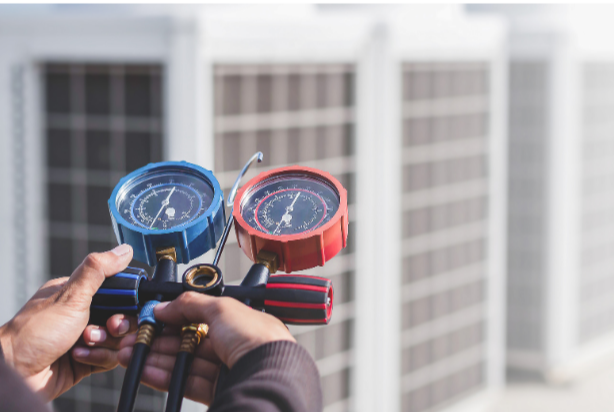
Practise systematic troubleshooting. For the 30% Maintenance and Repair section, rehearse the full diagnostic sequence: gather info → identify subsystem → take readings → determine cause → shut down and correct. Learn to read a manifold gauge set and interpret abnormal pressures and temperatures to pinpoint the faulty component quickly.
Master the CSA B52:F23 Code. Know refrigerant classifications, charge limits by occupancy type, machinery-room ventilation requirements, relief-device sizing and signage obligations. The 13th edition's treatment of A2L refrigerants is new territory for many candidates.
Use timed simulations. 180 minutes for 60 questions leaves 3 minutes per question on average, with extra time needed for calculation-heavy items. Prof-RBQ.ca's simulations reproduce real exam conditions so you arrive calibrated on test day.
8. Why Prof-RBQ.ca Is the Best Preparation Tool
Prof-RBQ.ca is the only CCQ exam preparation platform structured to follow the updated 2026 exam format exactly — three sections weighted 35% / 35% / 30% instead of the old 40 / 40 / 20 split. Every practice question is aligned with a specific competency element from the official CCQ profile, ensuring complete coverage of every assessed skill area.
The platform offers section-targeted quizzes, AI-powered flashcards — particularly valuable for a fully closed-book exam — structured lessons covering the key concepts from the five recommended reference works (including the latest 2024/2025 editions of Althouse, Silberstein and Jacquard/Sandre, plus the current CSA B52:F23), and timed exam simulations of 60 questions in 180 minutes reproducing real exam conditions.
Start Your Preparation Now
Targeted practice questions, AI-powered flashcards and timed exam simulations — available 24/7.
Access Prof-RBQ.caTraining from $250.00 CAD. Price shown at time of publication and may have changed since. See current pricing on Prof-RBQ.ca.
Frequently Asked Questions
What is the CCQ Refrigeration and Air Conditioning Mechanic exam and who is it for?
The CCQ Refrigeration and Air Conditioning Mechanic exam (Frigoriste) is the professional qualification exam administered by the Commission de la construction du Québec (CCQ). It is intended for refrigeration apprentices who wish to obtain their journeyman competency certificate, allowing them to install, start up, maintain and repair climate control and refrigeration systems on construction sites in Quebec. Prof-RBQ.ca offers complete training covering all three sections of this exam.
How long is the CCQ Refrigeration Mechanic exam?
The CCQ Refrigeration Mechanic exam lasts 3 hours (180 minutes). It consists of 60 multiple-choice questions worth 1 point each, covering 3 sections: Installation (35%), Startup (35%) and Maintenance and Repair (30%). Prof-RBQ.ca training prepares you to manage your time effectively through timed exam simulations.
What is the passing grade for the CCQ Refrigeration Mechanic exam?
The passing grade for the CCQ Refrigeration Mechanic exam is 60%, meaning at least 36 correct answers out of 60 questions. The exam covers 3 sections with distinct weightings: Installation (35%), Startup (35%) and Maintenance and Repair (30%). Prof-RBQ.ca structures its training around these 3 sections to maximize your chances of success.
Is the CCQ Refrigeration Mechanic exam open book or closed book?
The CCQ Refrigeration Mechanic exam is a fully closed-book exam: no reference documents are allowed during the exam. The only materials provided are a pencil, a ruler, a calculator, a blank sheet of paper and an eraser. All concepts, procedures, operating parameters and technical standards must be memorized before the exam. Prof-RBQ.ca offers AI-powered flashcards and targeted quizzes to facilitate memorization of all assessed content.
How many questions are on the CCQ Refrigeration Mechanic exam?
The CCQ Refrigeration Mechanic exam contains 60 multiple-choice questions, each worth 1 point, for a total of 60 points. To pass, a candidate must obtain at least 60% (36 correct answers). Prof-RBQ.ca reproduces this exact format in its timed exam simulations.
What are the 3 sections assessed on the CCQ Refrigeration Mechanic exam?
The CCQ Refrigeration Mechanic exam assesses 3 sections: (1) Installation of climate control and refrigeration systems (35% of the exam) — work planning, installation of bases, supports and anchors, equipment and piping setup, brazing, and installation of control accessories; (2) Startup of a climate control and refrigeration system (35%) — leak testing, system evacuation, refrigerant charging, circuit verification and final adjustments; (3) Maintenance and repair of systems (30%) — preventive maintenance, refrigerant retrofits, troubleshooting and corrective action. Prof-RBQ.ca covers each of these sections in depth.
What reference documentation is recommended to prepare for the CCQ Refrigeration Mechanic exam?
The CCQ recommends five reference works for preparation: Modern Refrigeration and Air Conditioning, 22nd ed. (Althouse et al., Goodheart-Willcox, 2025, English only), CSA B52:F23 Mechanical Refrigeration Code, 13th ed. (CSA Group, 2023), La pratique du froid, 7th ed. (Jacquard & Sandre, Dunod, 2024, French), Technologie des installations frigorifiques, 11th ed. (Rapin, Jacquard, Desmons, Dunod, 2021, French), and Refrigeration & Air Conditioning Technology, 10th ed. (Silberstein et al., Cengage Learning, 2025, English only). These materials must be mastered before the exam since no document is allowed during the session. Prof-RBQ.ca integrates the key concepts from these works into structured lessons and quizzes.
What types of systems are covered by the CCQ Refrigeration Mechanic exam?
The CCQ Refrigeration Mechanic exam covers residential, commercial, industrial and institutional climate control and refrigeration systems, including HVAC/R systems (heating, ventilation, air conditioning and refrigeration), hydronic systems, secondary refrigerant systems, heat pumps (air-to-air, air-to-water, water-to-water), variable refrigerant flow (VRF) systems, and associated control systems. Prof-RBQ.ca covers all these technologies in its training.
What is the brazing procedure and why is it important on the exam?
Brazing is an essential joining technique in refrigeration, used to connect copper piping in refrigerant circuits. The CCQ Refrigeration Mechanic exam assesses knowledge of the complete procedure: selection of the filler alloy (silver-copper-phosphorus or copper-phosphorus depending on base metals), surface preparation, progressive flame application, dry nitrogen purge to prevent internal copper oxidation (copper scale), and joint leak verification. Poor brazing can cause refrigerant leaks, moisture contamination of the circuit and compressor failure. Prof-RBQ.ca explains each step of this critical procedure.
What startup competencies are assessed on the CCQ Refrigeration Mechanic exam?
The Startup section (35% of the exam) covers two major components: startup preparation (system leak testing, vacuum evacuation to remove moisture and non-condensables, refrigerant charging according to manufacturer specifications, verification of electrical, control, refrigerant, air and water circuits) and the startup itself (system start-up in the correct sequence and final adjustments to achieve optimal operating parameters). Prof-RBQ.ca offers targeted practical exercises for each of these competencies.
How does one diagnose a refrigeration system malfunction according to the CCQ exam?
The CCQ Refrigeration Mechanic exam assesses a systematic diagnostic approach: (1) information gathering on the affected system (symptoms, operating conditions, history); (2) identification of the subsystem at fault (refrigerant circuit, electrical, control, air or water); (3) taking relevant readings on the subsystem (high and low pressures, temperatures, superheat, subcooling, current, voltage); (4) determining the nature and cause of the problem based on readings; and (5) shutting down the system and applying the necessary corrections. Prof-RBQ.ca trains candidates in this diagnostic process with realistic case scenarios.
How can I best prepare for the CCQ Refrigeration Mechanic exam?
To prepare effectively, focus on the three sections in proportion to their weight: Installation (35%), Startup (35%) and Maintenance and Repair (30%). Master the critical procedures — brazing, vacuum evacuation, refrigerant charging, leak testing and final adjustments. Since the exam is entirely closed-book, memorize key operating parameters (typical pressures, acceptable superheat and subcooling values, required vacuum levels, startup sequences). For Maintenance and Repair, practice systematic troubleshooting. Know the CSA B52:F23 Code — refrigerant classifications, charge limits and machinery room ventilation requirements. Prof-RBQ.ca offers section-targeted quizzes, AI-powered flashcards and timed 3-hour exam simulations to maximize your preparation.