3. Detailed competency elements
Section 1 — Work organization (42%)
Preparing the work:
- Interpret data from shop drawings
- Locate work positions on site
- Select materials and equipment
- Verify excavation reports and underground service location reports
- Install reference markers
- Inspect and maintain equipment
- Handle parts and equipment
- Worksite health and safety risk prevention
Communicating during work:
- Manual signaling of maneuvers to the crane operator
- Transmit instructions to the welder
Installing pile driving equipment on the crane:
- Connect the leads
- Install cables and crane safety accessories
- Select the drive cap
- Install the drive cap and hammer
- Install the lead foot
- Install the vibratory driver
Section 2 — Pile driving techniques (30%)
Placing soldier piles and shoring for deep excavations:
- Determine soldier pile driving locations
- Verify verticality, displacement, depth, and refusal during soldier pile driving
- Welding and oxy-cutting
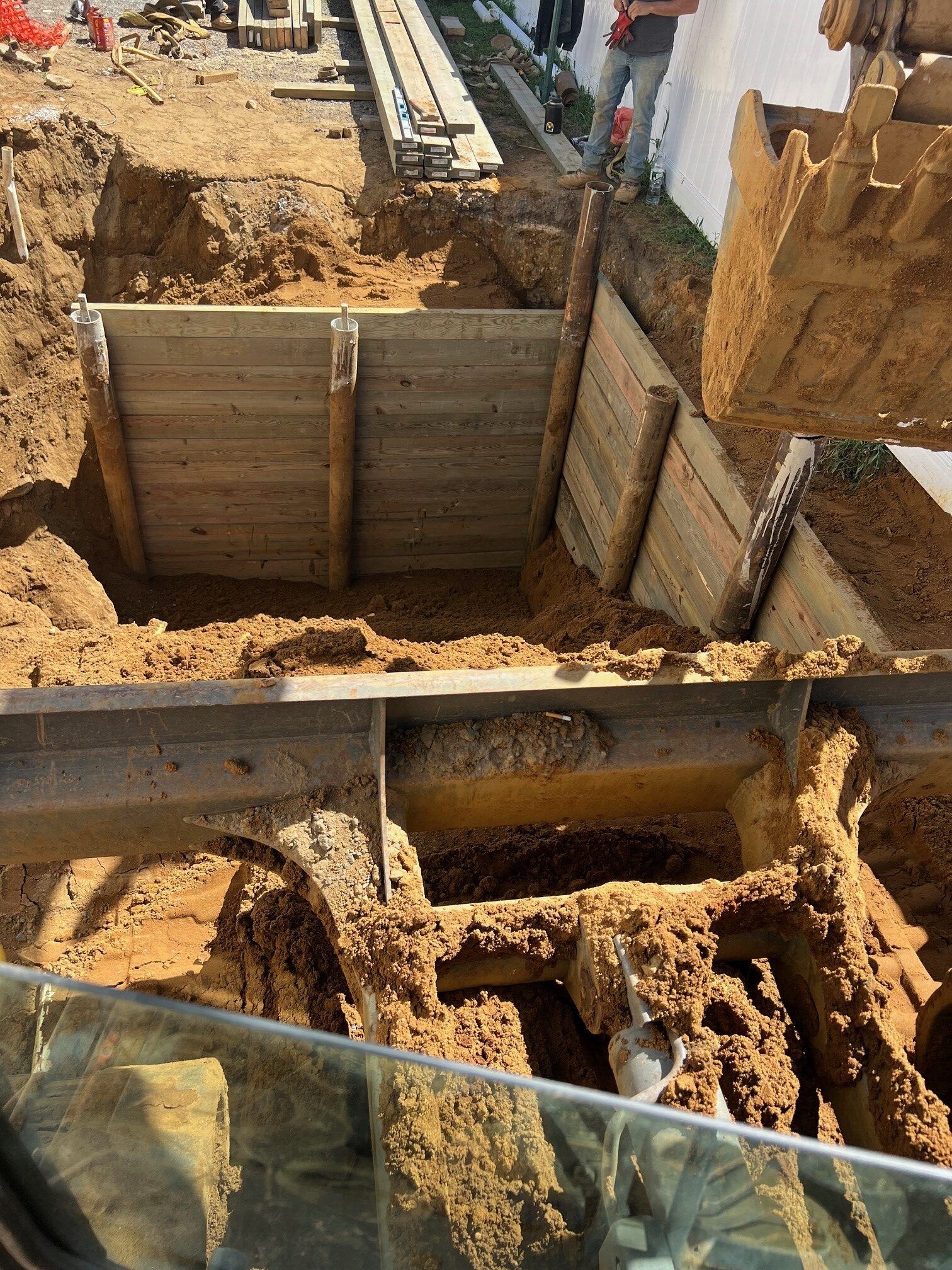
- Shoring of the soldier pile structure
Placing different types of piles:
- Driving methods for H-section piles, cased piles, drilled piles, belled-base piles, prestressed concrete piles, and screw piles
- Verify verticality, displacement, depth, and refusal during the driving of various pile types
Section 3 — Retaining structures (28%)
Building sheet pile retaining walls:
- Fabricate and assemble a driving template
- Install the driving template
- Thread the sheet piles
- Drive the sheet piles
- Verify watertightness of the sheet pile structure
- Stabilize the sheet piles
- Sheet pile extraction methods
Constructing a diaphragm (slurry) wall:
- Guide-wall formwork
- Verify guide-wall concrete placement
- Verify the clamshell and retention system
- Guide clamshell insertion
- Verify verticality of insertion
- Insert bentonite slurry into the excavation
- Prepare the joint
- Verify excavation cleaning
- Install joint pipes or flat joints
- Insert the reinforcement cage
- Install tremie pipes for concrete placement
- Joint pipe extraction methods
6. What makes the Deep foundation installer exam different
The Deep foundation installer trade is unusual in how heavily the exam weights preparation and equipment setup. Section 1 (42%) is dedicated almost entirely to what happens before a single pile is driven: shop drawing interpretation, site layout, underground service verification, equipment inspection, communication protocols, and the assembly of the pile driving rig on the crane. The leads, cables, drive cap, hammer, lead foot, and vibratory driver all have to be installed correctly on the crane in coordination with the crane operator. A single mistake in Section 1 setup creates a chain of consequences for everything in Sections 2 and 3.
Section 2 (30%) tests six distinct pile types — H-section, cased, drilled, belled-base, prestressed concrete, and screw piles — each with different driving methods, equipment, and refusal criteria. Quebec deep foundation work spans diverse geotechnical conditions, and the trade encompasses the systems used to handle them. A candidate who has only worked one or two pile types at their day job needs to study the others. Verticality, displacement, depth, and refusal verification recur across every pile type.
Section 3 (28%) covers two retaining systems that look almost nothing alike at the procedural level. Sheet pile walls are driven mechanically, with templates, threading, and stabilization. Diaphragm (slurry) walls are excavated under bentonite slurry with concrete placed by tremie pipes — a fundamentally different geotechnical approach. The exam treats these as equally important. Because the exam is closed book, the platform also tracks what you've actually memorized — flashcards spaced over multiple sessions surface weak areas before exam day.
Frequently asked questions
What is the CCQ Deep foundation installer qualification exam?
The CCQ qualification exam for the Deep foundation installer (Poseur de fondations profondes) trade is the official theoretical exam administered by the Commission de la construction du Québec to obtain a journeyman competency certificate. It evaluates competencies across three sections: Work organization (42%), Pile driving techniques (30%), and Retaining structures (28%).
Is the Deep foundation installer exam open book or closed book?
The CCQ Deep foundation installer exam is entirely closed book. No reference document is provided during the exam and personal documents are not allowed. Pile driving methods, refusal criteria, sheet pile and diaphragm wall procedures, and rigging rules must be memorized — focus your preparation on understanding rather than locating information in a manual.
How long is the exam and what is the passing grade?
The CCQ Deep foundation installer exam typically lasts 3 hours and the passing grade is 60%. The exam is offered in French and English in multiple-choice format. Confirm the official details on the CCQ website before your exam date.
What are the three sections of the exam?
The exam is divided into three sections: Section 1 — Work organization (42%); Section 2 — Pile driving techniques (30%); Section 3 — Retaining structures (28%). Section 1 is the heaviest single block by a clear margin and includes the equipment-on-crane setup that drives every downstream operation.
What does Section 1 — Work organization cover?
Section 1 (42%) covers preparing the work (interpreting shop drawing data, locating positions, selecting materials and equipment, checking excavation and service-location reports, installing reference markers, equipment inspection and maintenance, material handling, and worksite health and safety risk prevention), communicating during work (manual signaling to crane operators, transmitting instructions to welders), and installing pile driving equipment on the crane (lead connection, cables and crane safety accessories, drive cap selection, drive cap and hammer installation, lead foot installation, vibratory driver installation).
What does Section 2 — Pile driving techniques cover?
Section 2 (30%) covers placing soldier piles and shoring for deep excavations (determining soldier pile driving locations, verifying verticality, displacement, depth, and driving refusal, welding and oxy-cutting, shoring the soldier pile structure) and placing different types of piles (driving methods for H-section piles, cased piles, drilled piles, belled-base piles, prestressed concrete piles, and screw piles, plus verifying verticality, displacement, depth, and refusal during driving).
What does Section 3 — Retaining structures cover?
Section 3 (28%) covers building sheet pile retaining walls (fabricating and assembling a driving template, installing the template, threading sheet piles, driving them, verifying watertightness, stabilizing the wall, and extraction methods) and constructing diaphragm (slurry) walls (guide-wall formwork, verifying guide-wall concrete placement, checking the clamshell and retention system, guiding clamshell insertion and verticality, inserting bentonite into the excavation, preparing the joint, verifying excavation cleaning, installing joint pipes or flat joints, inserting the reinforcement cage, installing tremie pipes for concrete placement, and joint pipe extraction).
What documents are recommended for exam preparation?
The CCQ recommends four references: the Canadian Wood Council's Pieux en bois (Wood Piling), Ottawa, 1993, 76 p.; the Rigging and Lifting Safety Guide (Quebec translation by Marc Pelletier, 2006, 174 p.); Tomlinson and Woodward's Pile Design and Construction Practice (5th edition, Routledge, 2008, 551 p., English only); and the Quebec Safety Code for Construction Work (S-2.1, r.6, 2010, 272 p.). None of these documents are provided at the exam — they are study references only.
Why does Section 1 weigh 42% on this exam?
Section 1 (Work organization, 42%) is the heaviest block because deep foundation work depends on heavy equipment integration before any pile is driven. The leads, drive cap, hammer, and vibratory driver must be assembled correctly on the crane; the worksite must be laid out from shop drawings; underground services must be located; safety procedures and rigging must be in place; communication with the crane operator and welder must be flawless. A single mistake in Section 1 setup creates a chain of consequences for everything in Sections 2 and 3. The exam reflects that reality — the largest single block tests whether the candidate can plan and set up a deep foundation operation correctly.
Why does the exam test so many different pile types and retaining systems?
Quebec deep foundation work covers a wide range of geotechnical conditions, and the trade encompasses the systems used to handle them. Section 2 alone tests six pile types (H-section, cased, drilled, belled-base, prestressed concrete, screw) — each with different driving methods, equipment, and refusal criteria. Section 3 covers two retaining systems (sheet piles and diaphragm walls) that look almost nothing alike at the procedural level — sheet piles are driven mechanically, diaphragm walls are excavated under bentonite slurry with concrete placed by tremie. The exam tests breadth because the field requires it: a candidate who has only worked one type of pile or one retaining system needs to study the others.
How does Prof-RBQ.ca prepare me for the Deep foundation installer exam?
Prof-RBQ.ca offers an online preparation course aligned with the three official CCQ sections, with practice questions, flashcards, mock exams, and detailed explanations for every wrong answer. The platform mirrors the multiple-choice format of the actual exam so you arrive prepared, with extra emphasis on the heavyweight Section 1 (work organization and equipment setup) and dedicated coverage of all six pile types and both retaining systems.
How do I register for the Deep foundation installer preparation course?
Visit Prof-RBQ.ca to access the Deep foundation installer preparation course. A free section is available so you can try the platform before committing. Pricing and registration are available on Prof-RBQ.ca.