RBQ 14.2 Accessibility Lift License - Practice Tests
This online training offers purely theoretical and conceptual teaching. Users must consult and comply with current official codes and regulations before any practical application. In the event of a discrepancy, the regulatory texts systematically prevail over the educational content presented.
Online
Course
Now
Serge Williams
16 hours
32 minutes
3 Months
About the course
Practical approach
Globally oriented
For your career
Course Lessons
RBQ 14.2 Lifts for Persons with Physical Disabilities Contractor Licence Exam Preparation
Online course aligned with the four official modules of the Régie du bâtiment du Québec sub-category 14.2 contractor licence exam — practice questions, flashcards, mock exams, and detailed answer explanations covering accessibility-specific lift equipment (vertical platforms, stair chair lifts, stair platforms), drive systems (hydraulic, traction, screw-and-nut, pinion-rack), the regulatory framework (CAN/CSA B355 commercial and CAN/CSA B613 residential — both open at the exam — plus Quebec Construction Code Chapters I/IV/V, Safety Code Chapter IV, F-5/R-20 labour and qualification laws), plan reading and estimation including subsidized-work particulars (SHQ, OPHQ, SAAQ, CSST), and the full execution of installation, repair and maintenance work.
1. About the RBQ 14.2 contractor licence exam
The RBQ sub-category 14.2 exam is the theoretical examination administered by the Régie du bâtiment du Québec for candidates seeking to act as qualified representative (répondant) for a contractor licence covering lifts specifically designed for the transport of persons with physical disabilities — vertical platforms (with enclosed or non-enclosed shaft), stair chair lifts, and stair platforms — under CAN/CSA B355 (commercial) and CAN/CSA B613 (residential) standards, applicable through Chapter IV of the Quebec Construction Code, plus related construction work. The licence excludes work exclusively reserved for electrical contractors.
The exam is offered in French and English in multiple-choice format, lasts 3 hours, and the passing grade is 60%. It is built around four official modules covering definitions and types of systems, the regulatory framework, plans/specifications/estimation, and the standards for executing installation, repair and maintenance work.
2. Exam structure at a glance
| Module | Title | Competency elements | Skill statements |
|---|---|---|---|
| 1 | Definitions and types of systems | 2 | 10 |
| 2 | Legislative, normative and regulatory framework | 1 | 11 |
| 3 | Plans, specifications and estimation | 3 | 14 |
| 4 | Standards and execution of work | 5 | 34 |
The RBQ does not publish a percentage weighting per module for this licence. By content volume, Module 4 dominates with 34 skill statements across 5 ECs. EC 9 (Managing installation execution) carries 14 skill statements — the largest single block in Module 4. Module 2 is unusually large for an Encadrement module (11 statements) because lift work for persons with disabilities crosses the Construction Code, the Safety Code, the Canadian Electrical Code Section 38, the F-5 elevator mechanic qualification regulation outside construction, the R-20 construction labour relations law, Loi 72 environmental quality for hydraulic systems, and the accessibility-program authorities (SHQ, OPHQ, SAAQ, CSST).
3. Detailed competency elements
Module 1 — Definitions and types of systems
- EC 1 — Lift terminology (5 skill statements): lift types (vertical platforms with enclosed or non-enclosed shaft, stair chair lifts, stair platforms with protected or unprotected shaft — particularities of B355 vs. B613 appliances); component terms (hoistway, platform, cylinder, pump, controller, final terminal stop device, chain); vehicle types (standing platform, wheelchair platform, wheelchair-with-helper, two-person adapted platform, chair); drive machine types (suspension cable, pulley, drum drive, screw-and-nut, hydraulic, pinion, rack); control device operation (constant pressure, floor-selection-with-constant-pressure).
- EC 2 — System characteristics and operating principles (5 skill statements): component types and applications (brake, governor / safety, controller, door and door lock); operating principles (hydraulic, traction, screw-and-nut); dangers during use and installation impact (location, safety devices); electrical conductor and wiring types; normal and emergency power supplies.
Module 2 — Legislative, normative and regulatory framework
- EC 3 — Accessibility lift regulatory framework (11 skill statements): homologation standards (CSA, UL, ASME, W-H); Loi 72 environmental quality for hydraulic system soil protection; Loi R-20 construction labour relations and its regulation r.1; Loi F-5 workforce training and its r.4 regulation for elevator mechanic qualification outside construction; cross-references between Loi sur le bâtiment, Chapter IV of the Construction Code, B-355, NBC 95, and municipal regulations; CAN/CSA B355 and B613 application scope and limits; Quebec Construction Code Chapter I — Building and Chapter IV — Elevators; Quebec Construction Code Chapter III — Plumbing (drains français for hydraulic lifts); Quebec Safety Code Chapter IV; Canadian Electrical Code Section 38 and Chapter V — Electricity; authorities and bodies in scope: SHQ (Société d'habitation du Québec), OPHQ (Office des personnes handicapées du Québec), SAAQ (Société de l'assurance automobile du Québec), CSST (Commission de la santé et de la sécurité du travail).
Module 3 — Plans, specifications and estimation
- EC 4 — Evaluating work from a specification and site visit (3 skill statements): interpreting general and particular charges; validating the lift choice by standard scope, adapted client needs, building type and constraints; verifying all dimensions, modifications, details, accessories and materials required.
- EC 5 — Reading plans and drawings (5 skill statements): plan elements (plan view); symbol charts; dimensions and annotations; sections and details; general notes and tables.
- EC 6 — Estimating accessibility lift work (6 skill statements): identifying the lift matching plans/needs/standards; proposing renovations to an existing system per needs and standards; availability/lead times/pricing; resources and productivity rate; payment and warranty particulars for subsidized vs. non-subsidized work (SHQ/OPHQ programs); submission preparation and filing.
Module 4 — Standards and execution of work
- EC 7 — Installation planning (5 skill statements): user-specific needs assessment that impacts installation; material and equipment ordering; manufacturer installation steps planning; inspection and approval requirements; interface coordination between trades.
- EC 8 — Shop drawings and specifications (4 skill statements): shop drawing and installation sketch production; dissemination to stakeholders; explaining work particulars on plans; installation/modification sketches.
- EC 9 — Managing installation execution (14 skill statements — the heaviest single EC): material delivery and on-site placement; locating electrical/machine-room areas; tool provision and safe use; mechanic training on manufacturer steps; preserving wall, fire-stop and structural integrity; on-site technical issue resolution; quality control during and after installation against plans and standards; electrical supply from disconnect to controller (ampacity, wire size); pre-startup coordination (electricity); startup, verification and operational testing per Safety Code Chapter IV; user training on safe operation; conformity with standards, plans, manufacturer specs; manuals and forms handover; work declaration filing.
- EC 10 — Repair, verification and maintenance (8 skill statements): fault diagnosis; repair solutions; verification and maintenance obligations — B355 appliances subject to the Safety Code vs. B613 appliances not subject to the Safety Code; maintenance program per Safety Code Chapter IV Appendix B; visual and electrical test methods; maintenance per manufacturer or Safety Code; dangers requiring equipment immobilisation; maintenance and repair register.
- EC 11 — Health and safety (3 skill statements): installation and maintenance risks; precautions (confined space under platform, work at heights, movement, manual handling); safe scaffolding placement and use.
4. Documents at the exam — mixed-book format
Provided at the exam (open book — 7 documents)
- Code de construction (RLRQ, B-1.1, r.2) — Chapter I, Building 1995
- Code de construction du Québec (RLRQ, B-1.1, r.2) — Chapter IV, Elevators and Other Lifting Devices (2007)
- Code de construction du Québec (RLRQ, B-1.1, r.2) — Chapter V, Electricity (2007)
- Code de sécurité (RLRQ, B-1.1, r.3) — Chapter IV, Elevators and Other Lifting Devices
- Code de sécurité pour les travaux de construction (RLRQ, S-2.1, r.4) — Safety code for construction work
- CAN/CSA B355-00 — Elevating Devices for the Handicapped (commercial / public buildings — subject to the Quebec Safety Code Chapter IV)
- CAN/CSA B613-00 — Home Elevating Devices for the Handicapped (residential — NOT subject to the Quebec Safety Code)
Recommended reading only (closed book — 7 documents)
- Loi sur le bâtiment (RLRQ, B-1.1) — Building Act
- Règlement sur la qualification professionnelle des entrepreneurs et des constructeurs-propriétaires (RLRQ, B-1.1, r.9) — sub-category 14.2 scope
- Loi sur les relations du travail, la formation professionnelle et la gestion de la main-d'œuvre dans l'industrie de la construction (RLRQ, R-20) — Construction Labour Relations Law
- Loi sur la santé et la sécurité du travail (RLRQ, S-2.1) — Act respecting occupational health and safety
- Loi sur la formation et la qualification professionnelles de la main-d'œuvre (RLRQ, F-5) — Workforce Training and Qualification Act
- Règlement sur les certificats de qualification et sur l'apprentissage en matière d'électricité, de tuyauterie et de mécanique de système de déplacement mécanisé... (RLRQ, F-5, r.1) — elevator mechanic qualification certificates outside construction
- C22.1-F06 — Canadian Electrical Code Part 1 (20th edition), Safety Standard for Electrical Installations
Several Quebec documents are available free of charge on publicationsduquebec.gouv.qc.ca. CAN/CSA standards are available from the CSA store.
5. Material provided at the exam
The calculator, ruler, paper and pencil needed for the exam are supplied on site. Only the documents and material handed out by the exam supervisor may be used during the session — personal copies, notes, electronic devices, and additional reference material are not allowed.
6. What makes the RBQ 14.2 exam different
The RBQ 14.2 contractor licence is the installation and maintenance licence for accessibility-specific lifting equipment — vertical platforms, stair chair lifts, and stair platforms for persons with physical disabilities. Four characteristics make this exam stand apart.
Two CSA standards covering two building types. CAN/CSA B355 governs commercial and public-building lifts (offices, schools, retail, institutional). CAN/CSA B613 governs residential home lifts. Both are open at the exam. The candidate must apply the right standard to the right building type — EC 1.1 tests the particularities of a B355 vs. a B613 appliance directly.
The B355-vs.-B613 distinction drives a critical regulatory difference. B355 appliances ARE subject to the Quebec Safety Code Chapter IV — they require periodic verification and maintenance per a regulated program (maintenance per Appendix B of Chapter IV). B613 appliances are NOT subject to the Safety Code — their maintenance obligations are governed by the manufacturer rather than by a regulated program. EC 10.3 tests this distinction directly.
Subsidized-work particulars are tested directly. EC 6.5 tests payment and warranty specifics for subsidized vs. non-subsidized work, because accessibility lifts are frequently funded through programs administered by SHQ (Société d'habitation du Québec), OPHQ (Office des personnes handicapées du Québec), SAAQ (Société de l'assurance automobile du Québec — for road-injury rehabilitation), and CSST (Commission de la santé et de la sécurité du travail — for workplace-injury rehabilitation). EC 3.11 tests the candidate knowledge of these authorities and bodies.
User-specific needs assessment is a tested skill. EC 7.1 dedicates a skill statement to evaluating the particular needs of users that impact installation — height of wheelchair user, transfer mechanism, helper presence, two-person platform requirement. EC 9.11 dedicates a skill statement to sensitising and training users on safe lift operation. No other RBQ contractor licence puts the end user this directly into the test scope.
7. Recommended preparation strategy
- Master CAN/CSA B355 navigation. The commercial / public-building accessibility lift standard. Drill the table of contents — vertical platforms, stair lifts, controls, safety devices, doors — until you can locate any clause in seconds.
- Master CAN/CSA B613 navigation. The residential home lift standard. Practise switching between B355 and B613 based on building type, and know which clauses differ between commercial and residential applications.
- Master the B355 / B613 regulatory distinction. B355 appliances are subject to the Safety Code Chapter IV (regulated maintenance program per Appendix B). B613 appliances are not. EC 10.3 tests this directly — expect multiple exam questions on which maintenance regime applies.
- Master the dual-chapter Quebec regulatory layer. Construction Code Chapter IV (installation) and Safety Code Chapter IV (operational safety) are both open at the exam. Know which clause lives where, and how Chapter V (Electricity) ties in for the lift electrical installation per Canadian Electrical Code Section 38.
- Master the four equipment types. Vertical platforms (enclosed and non-enclosed shaft), stair chair lifts, stair platforms (protected and unprotected shaft). Plus five vehicle types: standing platform, wheelchair platform, wheelchair-with-helper, two-person adapted platform, chair.
- Master the SHQ/OPHQ/SAAQ/CSST authority map. EC 3.11 tests this directly. Know which authority funds which type of accessibility work — residential home adaptation (SHQ), general accessibility advocacy (OPHQ), post-road-injury rehabilitation (SAAQ), post-workplace-injury rehabilitation (CSST).
- Master subsidized-work payment and warranty particulars. EC 6.5 tests this directly. Know how subsidy programs affect submission preparation, payment timing, and warranty obligations.
- Anchor preparation around Module 4 (34 skill statements). EC 9 alone has 14 statements covering on-site installation management — read them as a sequenced workflow from material delivery through work declaration filing.
- Master user-specific needs assessment and user training. EC 7.1 (assessing user needs impacting installation) and EC 9.11 (training users on safe operation) are unique to this licence among RBQ contractor licences.
- Take at least two full mock exams under real conditions (3 hours, only the seven open-book documents on the desk) before scheduling the real exam.
8. Why Prof-RBQ.ca for the RBQ 14.2 exam
- Aligned with the official RBQ structure — content mapped one-to-one to the four modules and their 11 competency elements, with extra depth on Module 4 (34 skill statements across 5 ECs, including the 14-statement EC 9 installation block).
- Dual-standard navigation drills — practice switching between CAN/CSA B355 (commercial) and B613 (residential) based on building type, with worked exam-style examples on each.
- B355 vs. B613 regulatory mapping — Safety Code Chapter IV applicability drilled into automatic recall, including maintenance program per Appendix B.
- Equipment-type training — vertical platforms, stair chair lifts, stair platforms walked through with operating principles, drive systems and components.
- Subsidized-work focus — SHQ, OPHQ, SAAQ, CSST authority map and the payment / warranty particulars for subsidized accessibility installations.
- User-needs assessment training — adapted to wheelchair user height, transfer mechanism, helper presence, two-person platform requirement.
- Closed-book training methodology — flashcards and spaced practice for the seven closed-book documents (Building Act, Qualification Reg, R-20, OHS Act, F-5, F-5 r.1, Canadian Electrical Code Part 1), with navigation drills for the seven open-book references.
- Mock exams in RBQ format — multiple choice, 3-hour timing, 60% passing grade — so exam day feels familiar.
- Detailed answer explanations — every question, right or wrong, comes with a written rationale citing the underlying article, code, or standard.
- Bilingual — full course in English and French. The RBQ exam itself is offered in both languages.
Get ready for your RBQ 14.2 contractor licence exam
Online course, mock exams, flashcards, and answer explanations — built for the mixed-book RBQ format and the full scope of accessibility-lift work, from CAN/CSA B355 commercial to CAN/CSA B613 residential, with focus on the Safety Code applicability distinction.
395 $ – 595 $ CAD (taxes included)
Access Prof-RBQ.caProf-RBQ.ca courses are priced between 395 CAD and 595 CAD depending on the licence — taxes are included. Pricing is subject to change — confirm the current rate on Prof-RBQ.ca before purchasing.
Frequently asked questions
What is the RBQ 14.2 Lifts for persons with physical disabilities contractor licence exam?
The RBQ sub-category 14.2 exam is the theoretical examination administered by the Régie du bâtiment du Québec for candidates seeking to act as qualified representative (répondant) for a contractor licence covering lifts specifically designed for the transport of persons with physical disabilities — vertical platforms (with enclosed or non-enclosed shaft), stair chair lifts, and stair platforms — under CAN/CSA B355 (commercial) and CAN/CSA B613 (residential) standards, applicable through Chapter IV of the Quebec Construction Code. The licence excludes work exclusively reserved for electrical contractors. The exam is built around four modules: definitions and types of systems, the legislative/normative/regulatory framework, plans/specifications/estimation, and standards and execution of work.
What is the difference between RBQ 14.1 and RBQ 14.2?
RBQ 14.1 (Passenger and freight elevators) covers general elevators, freight elevators, dumbwaiters, escalators, moving walks and material lifts under CAN/CSA B44. RBQ 14.2 (Lifts for persons with physical disabilities) is narrower: it covers ONLY accessibility-specific equipment — vertical platforms, stair chair lifts and stair platforms — designed for transporting persons with physical disabilities under CAN/CSA B355 (commercial buildings) and CAN/CSA B613 (residential buildings). The two licences are governed by entirely different CSA standards, target different end users, and use different drive systems and components.
What is the difference between CAN/CSA B355 and CAN/CSA B613?
CAN/CSA B355 — Elevating Devices for the Handicapped — covers commercial and public-building lifts (offices, schools, retail, institutional). These devices ARE subject to the Quebec Safety Code Chapter IV, which means they require periodic verification and maintenance per a regulated program. CAN/CSA B613 — Home Elevating Devices for the Handicapped — covers residential lifts installed in private homes. These devices are NOT subject to the Safety Code (EC 10.3 tests this distinction directly), so their maintenance obligations are governed by the manufacturer rather than by a regulated program. Both standards are open at the exam, and candidates must apply the right one to the building type.
Is the RBQ 14.2 exam open book or closed book?
The RBQ 14.2 exam is mixed book. SEVEN documents are provided to candidates during the exam: the Quebec Construction Code Chapter I — Building 1995 (B-1.1, r.2), the Quebec Construction Code Chapter IV — Elevators and Other Lifting Devices (2007), the Quebec Construction Code Chapter V — Electricity (2007), the Safety Code Chapter IV — Elevators and Other Lifting Devices (B-1.1, r.3), the Safety code for construction work (S-2.1, r.4), CAN/CSA B355-00 — Elevating Devices for the Handicapped, and CAN/CSA B613-00 — Home Elevating Devices for the Handicapped. Seven additional documents are listed as recommended reading only — including the Building Act, the Professional Qualification Regulation (B-1.1, r.9), the Construction Labour Relations Law (R-20), the Act respecting occupational health and safety (S-2.1), the Workforce Training and Qualification Act (F-5) and its regulation, and the Canadian Electrical Code Part 1 (C22.1-F06).
How long is the exam and what is the passing grade?
The RBQ 14.2 exam lasts 3 hours and the passing grade is 60%. It is offered in French or English in multiple-choice format. The calculator, ruler, paper and pencil needed for the exam are supplied on site, along with the seven reference documents listed as Fourni à l examen. Confirm the official details on the RBQ website before your exam date.
What are the four modules of the RBQ 14.2 exam?
The exam is built around four modules: Module 1 — Definitions and types of systems (2 competency elements, 10 skill statements); Module 2 — Legislative, normative and regulatory framework (1 competency element, 11 skill statements — including the SHQ/OPHQ/SAAQ/CSST authority enumeration unique to this licence); Module 3 — Plans, specifications and estimation (3 competency elements, 14 skill statements — with dedicated ECs for spec evaluation, plan reading and estimation including subsidized-work particulars); Module 4 — Standards and execution of work (5 competency elements, 34 skill statements). Module 4 dominates with 34 skill statements, and within it EC 9 (Managing installation execution) carries 14 skill statements — the largest single block.
What types of equipment and drive systems are tested?
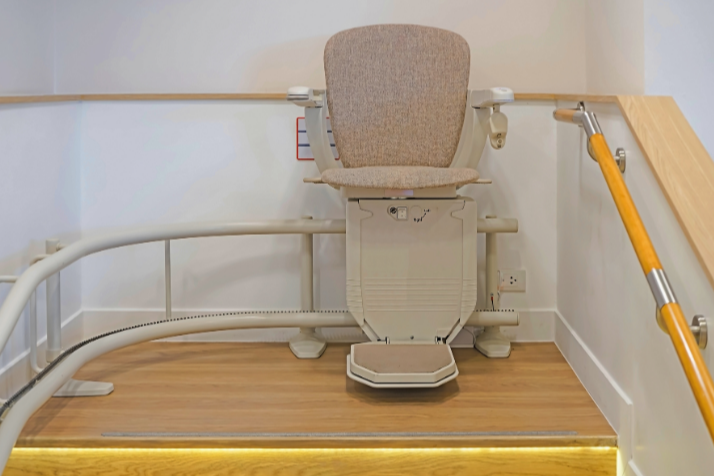
Equipment in scope: vertical platforms (plates-formes verticales) with enclosed or non-enclosed shaft, stair chair lifts (fauteuils élévateurs d escalier), and stair platforms (plates-formes d escalier) with protected or unprotected shaft. Vehicle types: standing platform, wheelchair platform, wheelchair-with-helper platform, two-person adapted platform, chair. Drive systems: suspension cable, pulley, drum drive, screw-and-nut, hydraulic, pinion, rack. Operating principles: hydraulic, traction, screw-and-nut. Control devices: constant pressure (à pression maintenue) — typical for stair lifts requiring continuous user input — and floor-selection-with-constant-pressure (à sélection de palier à pression maintenue) — typical for vertical platforms.
Which Quebec authorities and bodies oversee accessibility lifts?
EC 3.11 of Module 2 tests the candidate knowledge of the Quebec authorities and bodies that apply and regulate accessibility lifts: SHQ — Société d habitation du Québec (residential accessibility programs and funding); OPHQ — Office des personnes handicapées du Québec (advocacy and accessibility policy coordination); SAAQ — Société de l assurance automobile du Québec (rehabilitation programs that may fund residential adaptations after a road accident); CSST — Commission de la santé et de la sécurité du travail (workplace accessibility funding after a workplace injury). Accessibility lift work is frequently subsidized through these programs — EC 6.5 tests payment and warranty particulars for subsidized vs. non-subsidized work.
What does Module 4 — Standards and execution of work cover?
Module 4 is the largest module (5 competency elements, 34 skill statements). It covers: EC 7 — Installation planning (5 skill statements: user-specific needs assessment, material and equipment ordering, manufacturer installation steps, inspection/approval requirements, interface coordination); EC 8 — Providing shop drawings and specifications (4 skill statements); EC 9 — Managing installation execution (14 skill statements — the heaviest block: material delivery, electrical/machine-room locations, tool provision, mechanic training on manufacturer steps, fire-stop and structural integrity, on-site issue resolution, quality control, electrical supply, pre-startup coordination, startup tests per Safety Code, user training on safe operation, conformity, manuals handover, work declaration); EC 10 — Repair, verification and maintenance (8 skill statements: fault diagnosis, repair solutions, B355 vs. B613 verification obligations, maintenance program per Safety Code Chapter IV Appendix B, visual and electrical test methods, immobilisation conditions, maintenance register); EC 11 — Health and safety (3 skill statements: confined space under platform, work at heights, movement, manual handling, safe scaffolding).
What documents are recommended for the RBQ 14.2 exam?
Fourteen documents are listed by the RBQ. SEVEN are provided at the exam: the Code de construction Chapter I — Building 1995 (RLRQ, B-1.1, r.2); the Code de construction Chapter IV — Elevators and Other Lifting Devices (2007); the Code de construction Chapter V — Electricity (2007); the Code de sécurité Chapter IV — Elevators and Other Lifting Devices (RLRQ, B-1.1, r.3); the Code de sécurité pour les travaux de construction (RLRQ, S-2.1, r.4); CAN/CSA B355-00 — Elevating Devices for the Handicapped; and CAN/CSA B613-00 — Home Elevating Devices for the Handicapped. SEVEN are recommended reading only: the Building Act (RLRQ, B-1.1); the Professional Qualification Regulation (RLRQ, B-1.1, r.9); the Construction Labour Relations Law (RLRQ, R-20); the Act respecting occupational health and safety (RLRQ, S-2.1); the Workforce Training and Qualification Act (RLRQ, F-5); the related regulation (RLRQ, F-5, r.1) for elevator mechanic qualification certificates outside construction; and C22.1-F06 Canadian Electrical Code Part 1, 20th edition.
How does Prof-RBQ.ca prepare me for the RBQ 14.2 exam?
Prof-RBQ.ca offers an online preparation course aligned with the four official RBQ modules, with practice questions, flashcards, mock exams, and detailed explanations for every wrong answer. The platform mirrors the multiple-choice format of the actual exam. Because the exam is mixed book (CAN/CSA B355 and B613 plus four Construction/Safety Code chapters and S-2.1 r.4 are on the desk — seven open documents total), the course focuses on navigation drills across B355 and B613 in particular and on memorization of the seven closed-book documents — especially the Canadian Electrical Code Section 38 and the F-5 elevator mechanic qualification regulation. Extra emphasis on the B355 (commercial, subject to Safety Code) vs. B613 (residential, not subject to Safety Code) distinction, the SHQ/OPHQ/SAAQ/CSST authority enumeration, subsidized-work payment and warranty particulars, and Module 4 (34 skill statements across 5 ECs, including the 14-statement EC 9 installation block).
How much does the course cost and how do I register?
The Prof-RBQ.ca preparation course is priced between 395 CAD and 595 CAD (taxes included) depending on the licence. Pricing is subject to change — confirm the current rate on Prof-RBQ.ca before purchasing. Registration is available directly on Prof-RBQ.ca, and a free section is available so you can try the platform before committing.