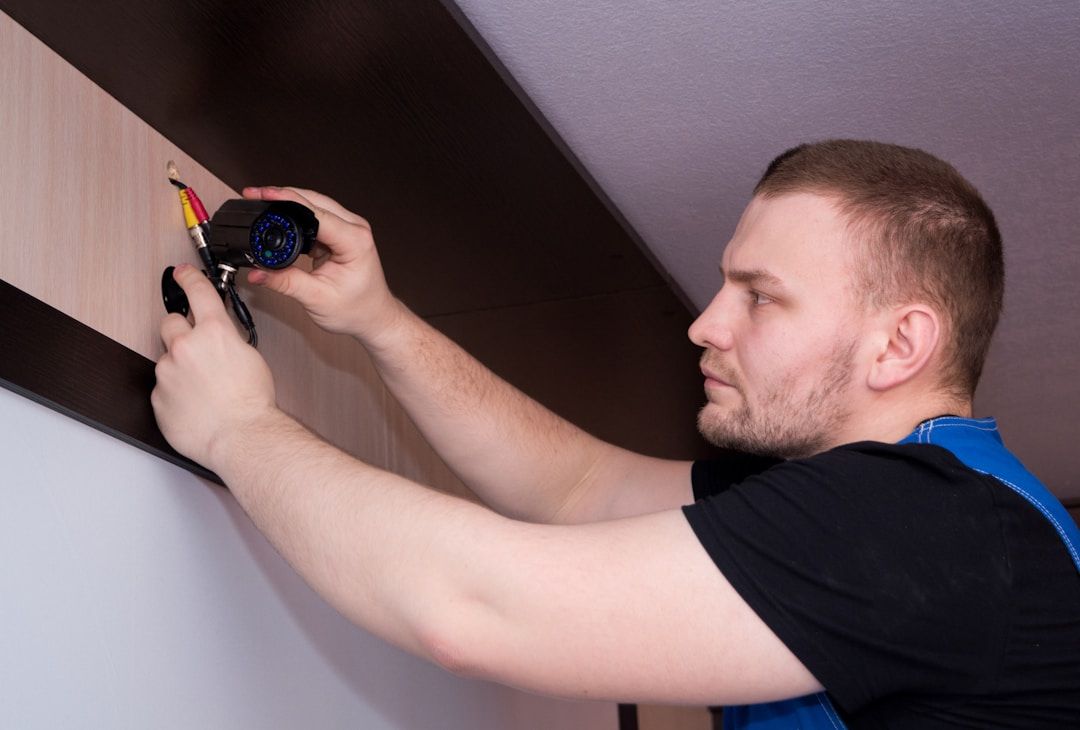
Master the Complexities of Security Systems Installation
Comprehensive training designed to help apprentices conquer the CCQ provincial exam and secure their Journeyman competency certificate.
Format
Online Course
Starting date
Now
Author
Serge Williams
Video
16 hours 32 minutes
Access valid for:
3 Months
About the course
Path to Journeyman Status Transitioning from an apprentice to a Journeyman in this specialty requires the successful completion of a rigorous provincial qualification examination. Our course is built specifically for candidates who have navigated the 1,485-hour DEP (Installation and Maintenance of Security Systems) and their subsequent apprenticeship periods. With Journeyman wages reaching over $39.00/hour plus benefits, passing this exam is the most critical milestone for your career.
Technical Mastery & Exam FocusThe CCQ examination is a comprehensive 3-hour test that evaluates your mastery over three critical areas:
Evaluation & Planning (20%): Mastering the analysis of client plans, specifications, and coordination with other trades.
Installation & Modification (50%): Deep dives into cabling, component mounting, power supply, and programming for complex systems.
Maintenance & Servicing (30%): Expertise in troubleshooting, annual inspections, and ensuring compliance with ULC standards for fire and burglar alarms.
Start for Free We understand the high stakes of the provincial exam. Our platform provides simulated exam questions and technical drills to ensure you are ready for every challenge, from semi-conductor circuits to emergency communication systems. Access the entire first section of the course for free today to begin your final push toward Journeyman certification.
Practical approach
Our training is designed to provide the skills in a practical approach. Our students' success is our best asset in showing the quality of our training.
Globally oriented
Strategies shared and knowledge earned allows our students to immediately set up their business and start offering their services around the globe.
For your career
Whether you want to boost your career within the company you are working or grow at your own business by applying the latest strategies we teach, this is the way.
Course Lessons
Empty space, drag to resize
CCQ Security Systems Installer Qualification Exam Preparation | Prof-RBQ.ca
CCQ Security Systems Installer Qualification Exam Preparation
Online course aligned with the three official sections of the CCQ Security systems installer (Installateur de systèmes de sécurité) qualification exam — practice questions, flashcards, mock exams, and detailed answer explanations grounded in the Quebec Electrical Code, the National Fire Code, and the eight ULC standards.
3Official sections
5Competency elements
23Practical skills
3 hExam length
60 %Passing grade
Closed bookFormat
1. About the CCQ Security systems installer exam
The Security systems installer (Installateur de systèmes de sécurité) qualification exam is the official theoretical evaluation administered by the Commission de la construction du Québec (CCQ). Passing this exam is a key step toward obtaining a journeyman competency certificate and being authorized to install fire alarm, intrusion alarm, access control, and CCTV systems on Quebec construction sites.
The exam covers three sections weighted as follows: Assessing the work (20%), Installing and modifying a security system (50%), and Performing maintenance and service (30%). It is offered in French and English in multiple-choice format and lasts approximately 3 hours, with a passing grade of 60%.
2. Exam structure at a glance
Section
Title
Weight
Focus
1
Assessing the work
20 %
Client needs, plans, material selection, installation planning, coordination
2
Installing and modifying a security system
50 %
Wiring, components, power-up, programming, testing, client training
3
Maintenance and service
30 %
Inspection, battery checks, firmware updates, central station tests, troubleshooting
Section 2 is the heaviest single block by a wide margin (50%). Combined with Section 3 (maintenance), the hands-on installation and service portion of the exam is 80% of the score. Section 1 (planning and assessment) is the smallest at 20% but still mandatory.
3. Detailed competency elements
Section 1 — Assessing the work (20%)
Understanding needs and recommendations:
Meet with the client, read the specifications, validate and modify them as needed
Analyze the client's plans or create a plan with the client
Choose appropriate materials based on the work to be performed
Know and choose specialized equipment
Planning:
Plan the installation of wiring and components
Examine the site (physical installation planning)
Coordinate with other trades and service providers
Section 2 — Installing and modifying a security system (50%)
Installing or modifying the security system:
Install the wiring
Install all components
Power up the system
Program and configure the system
Perform testing and complete verification
Provide system training to clients
Section 3 — Maintenance and service (30%)
Performing maintenance:
Prepare the verification with the central monitoring station or authorities
Check batteries
Clean components
Replace broken parts
Verify the installation
Perform system tests with the central station and the annual inspection
Update software, licenses, and firmware
Return the system to service
Providing service:
Diagnose problems
Resolve issues
4. Documents provided at the exam
No documents provided — the exam is entirely closed book. No reference manual, no notes, no electronic device. The Quebec Electrical Code, the National Fire Code, and the ULC standards must be memorized.
This is a defining feature of all CCQ trade qualification exams: unlike RBQ contractor exams (some of which are open book), CCQ exams are systematically closed book regardless of the trade. For Security systems installer candidates this is particularly demanding because the eight ULC standards plus the Quebec Electrical Code and the National Fire Code together represent thousands of pages of regulatory content — plan your study accordingly.
5. Recommended study documents
The CCQ suggests the following references for preparation. None of them will be available during the exam — they are study aids only. Use them to build understanding, then test recall with practice questions and flashcards.
Quebec Construction Code, Chapter V — Electricity (Canadian Electrical Code Part I with Quebec amendments, CSA C22.10-18, 23rd edition) — CSA Group, Mississauga, 2018, 806 p. (csagroup.org)
National Fire Code of Canada 2020 (11th edition) — National Research Council Canada, Ottawa, 2020, 354 p. (nrc.canada.ca)
National Building Code of Canada 2010 (13th edition) — National Research Council Canada, Ottawa, 2010, 1280 p. (nrc.canada.ca)
CAN/ULC-S527 — Control Units for Fire Alarm Systems (English only) — ULC, Toronto, 2011 (ul.com)
CAN/ULC-S559 — Equipment for Fire Signal Receiving Centres and Systems — ULC, Toronto, 2004 (ul.com)
CAN/ULC-S536 — Inspection and Testing of Fire Alarm Systems — ULC, Toronto, 2004 (ul.com)
CAN/ULC-S524 — Installation of Fire Alarm Systems (with Amendment 1) — ULC, Toronto, 2006 (ul.com)
CAN/ULC-S302 — Installation and Classification of Burglar Alarm Systems for Banks, Commercial Establishments, Safes and Vaults — ULC, Toronto, 1991 (ul.com)
CAN/ULC-S310 — Installation and Classification of Residential Burglar Alarm Systems — ULC, Toronto, 1991 (ul.com)
CAN/ULC-S561 — Installation and Services for Fire Signal Receiving Centres and Systems — ULC, Toronto, 2003 (ul.com)
CAN/ULC-S537 — Verification of Fire Alarm Systems — ULC, Toronto, 2004 (ul.com)
Manufacturer technical resources — American Dynamics, CDVI, DMP, DSC, Kantech, Notifier, Paradox, Pelco, Honeywell Security (and other manufacturers as encountered on jobs)
6. What makes the Security systems installer exam different
The Security systems installer trade is unusual in how heavily it depends on a specific family of regulatory standards. The eight ULC standards listed by the CCQ each govern a distinct slice of the trade — control units (S527), equipment (S559), inspection and testing (S536), installation procedures (S524), commercial and bank intrusion alarms (S302), residential intrusion alarms (S310), central monitoring station services (S561), and fire alarm verification (S537). Layered on top are the Quebec Electrical Code (CSA C22.10) and the National Fire Code. A candidate cannot pass this exam from general electrical knowledge alone — the questions probe specific procedures and rules drawn from individual ULC standards by number.
The exam is also unusual in its weighting toward hands-on work. Section 2 (installation, 50%) and Section 3 (maintenance, 30%) together account for 80% of the score. The trade is field-heavy: most of the exam tests what a candidate would actually do in a building — wiring, mounting, programming, testing, troubleshooting, returning to service. Section 1 (planning and client assessment, 20%) is smaller but still mandatory and covers the upstream decisions that determine whether installation work is correct in the first place.
Section 3's emphasis on firmware and software updates reflects how modern security systems have evolved. Annual inspections now routinely include software patching, license validation, and central-station communication tests — content that legacy installers may not have encountered during their apprenticeship. Because the exam is closed book, the platform also tracks what you've actually memorized — flashcards spaced over multiple sessions surface weak areas before exam day.
7. Recommended preparation strategy
Anchor preparation around Section 2 (50%) and Section 3 (30%). Together they are 80% of the exam. Master the installation and maintenance workflows.
Treat the exam as closed book from day one. Memorize ULC standard numbers and what each one covers — questions often refer to a specific standard by number.
Read the recommended documents in this order: Quebec Electrical Code (CSA C22.10) for the wiring rules, then ULC S524 (installation), then ULC S536 (inspection and testing) and S537 (verification), then ULC S527 and S559 (equipment), then S302/S310 (intrusion classification), then S561 (central station services), then the National Fire Code and National Building Code for code references, and finally manufacturer documentation for specific systems.
Build a mental map of the eight ULC standards. Each one occupies a specific slot — knowing which standard governs which scenario is half the work.
Drill troubleshooting and diagnosis questions. Section 3's service content is often where field experience pays off if combined with knowledge of the standards.
Take at least two full mock exams under real conditions (3 hours, no documents, single sitting) before scheduling the real exam.
Review every wrong answer. The Prof-RBQ.ca platform shows the reasoning behind each correct answer — read every explanation, even on questions you got right.
8. Why Prof-RBQ.ca for the Security systems installer exam
Aligned with the official CCQ structure — content mapped one-to-one to the three sections, with code-rule coverage anchored to CSA C22.10, the National Fire Code, and the eight ULC standards.
Closed-book training methodology — flashcards and spaced practice designed for memorization of standard numbers, scope, and procedures.
Mock exams in CCQ format — multiple choice, 3-hour timing, scoring out of 60% — so exam day feels familiar.
Detailed answer explanations — every question, right or wrong, comes with a written rationale tied back to the relevant standard or code rule.
Bilingual — full course in English and French. The CCQ exam itself is offered in both languages.
A free section is available so you can try the platform before committing.
Get ready for your CCQ Security systems installer exam
Online course, mock exams, flashcards, and answer explanations — built around the eight ULC standards and the closed-book CCQ format.
Pricing and registration available on Prof-RBQ.ca.
Frequently asked questions
What is the CCQ Security systems installer qualification exam?
The CCQ qualification exam for the Security systems installer (Installateur de systèmes de sécurité) trade is the official theoretical exam administered by the Commission de la construction du Québec to obtain a journeyman competency certificate. It evaluates competencies across three sections: Assessing the work (20%), Installing and modifying a security system (50%), and Performing maintenance and service (30%).
Is the Security systems installer exam open book or closed book?
The CCQ Security systems installer exam is entirely closed book. No reference document is provided during the exam and personal documents are not allowed. The Quebec Electrical Code, the National Fire Code, and the eight ULC standards governing fire alarm and intrusion systems must be memorized — focus your preparation on understanding code rules rather than locating them in a manual.
How long is the exam and what is the passing grade?
The CCQ Security systems installer exam typically lasts 3 hours and the passing grade is 60%. The exam is offered in French and English in multiple-choice format. Confirm the official details on the CCQ website before your exam date.
What are the three sections of the Security systems installer exam?
The exam is divided into three sections: Section 1 — Assessing the work (20%); Section 2 — Installing and modifying a security system (50%); Section 3 — Performing maintenance and service (30%). Section 2 is the heaviest single block by a wide margin, and together Sections 2 and 3 account for 80% of the score — the exam is built around hands-on installation and service work.
What does Section 1 — Assessing the work cover?
Section 1 (20%) covers understanding client needs and recommendations (meeting with the client, reading and modifying specifications, analyzing or creating plans with the client, selecting appropriate materials, knowing and choosing specialized equipment) and planning (planning the installation of wiring and components, examining the site for physical installation planning, and coordinating with other trades and service providers).
What does Section 2 — Installing and modifying a security system cover?
Section 2 (50%) covers installing or modifying the security system: installing the wiring, installing all components, powering up the system, programming and configuring the system, performing complete testing and verification, and providing client training on the installed system.
What does Section 3 — Maintenance and service cover?
Section 3 (30%) covers performing maintenance (preparing verification with the central monitoring station or authorities, checking batteries, cleaning components, replacing broken parts, verifying the installation, performing system tests with the central station and the annual inspection, updating software, licenses, and firmware, returning the system to service) and providing service (diagnosing problems and resolving issues).
What documents are recommended for exam preparation?
The CCQ recommends a substantial reference list: the Quebec Construction Code, Chapter V — Electricity (Canadian Electrical Code Part I with Quebec amendments, CSA C22.10-18, 23rd edition, 2018, 806 p.); the National Fire Code of Canada 2020 (11th edition, 354 p.); the National Building Code of Canada 2010 (13th edition, 1280 p.); and eight ULC standards covering fire alarm control units (S527), fire alarm equipment (S559), inspection and testing (S536), installation (S524), commercial and bank burglar alarms (S302), residential burglar alarms (S310), fire alarm receiving station services (S561), and fire alarm verification (S537). The CCQ also points candidates to manufacturer websites (American Dynamics, DSC, Kantech, Notifier, Paradox, Pelco, Honeywell, etc.). None of these documents are provided at the exam — they are study references only.
Why are there so many ULC standards on this exam?
The Security systems installer trade is unusual in how heavily it depends on a specific family of standards. The eight ULC standards listed by the CCQ each govern a distinct slice of the trade — control units, system equipment, installation procedures, inspection, testing, verification, residential and commercial intrusion classification, and central station services. A candidate cannot pass the exam from general electrical knowledge alone: the questions probe specific procedures and rules drawn from individual ULC standards. This is what makes the trade highly regulated even though the work itself often looks like wiring and component mounting.
How does Prof-RBQ.ca prepare me for the Security systems installer exam?
Prof-RBQ.ca offers an online preparation course aligned with the three official CCQ sections, with practice questions, flashcards, mock exams, and detailed explanations for every wrong answer. The platform mirrors the multiple-choice format of the actual exam so you arrive prepared, with extra emphasis on the heavyweight Section 2 (installation) and Section 3 (maintenance) and dedicated coverage of the ULC standards that drive most regulatory questions.
Is the preparation course available in English?
Yes. Prof-RBQ.ca offers the Security systems installer preparation in English and French. The official CCQ exam is also offered in both languages — choose your exam language when registering with the CCQ.
How do I register for the Security systems installer preparation course?
Visit Prof-RBQ.ca to access the Security systems installer preparation course. A free section is available so you can try the platform before committing. Pricing and registration are available on Prof-RBQ.ca.
John Davis
John Davis has more than 10 years experience working within organizations, mainly in HR functions. He has worked with startups, small and medium-sized businesses, and large corporations, including in recruitment, performance appraisal, training and coaching. He has coached leaders and teams to unlock their potential, to innovate, adapt, and grow. His coaching is based on a deep understanding of their strengths, their needs, how they connect with others, and how they learn.