WARNING!
This online training offers purely theoretical and conceptual teaching. Users must consult and comply with current official codes and regulations before any practical application. In the event of a discrepancy, the regulatory texts systematically prevail over the educational content presented.
Format
Online Course
Starting date
Now
Author
Serge Williams
Video
16 hours 32 minutes
Duration
3 Months
Course Lessons
Empty space, drag to resize
Complete and strategic guide: passing the RBQ 1.1.2 exam — Contractor — new residential buildings covered by a guarantee plan, Class II
1. What is the RBQ 1.1.2 licence and who needs it?
The RBQ 1.1.2 licence, Contractor — new residential buildings covered by a guarantee plan, Class II (Entrepreneur en bâtiments résidentiels neufs visés à un plan de garantie, classe II), is the general-contractor subclass for new residential construction covered by a guarantee plan in Québec. Anyone who carries out or offers to carry out such work for others must hold an RBQ licence, must enrol in an approved guarantee plan, and the guarantor (répondant) behind the licence must pass the qualification exam of the Régie du bâtiment du Québec (RBQ). This guide from Prof-RBQ.ca maps exactly what that exam covers.
2. Scope of the licence: what work does it authorize?
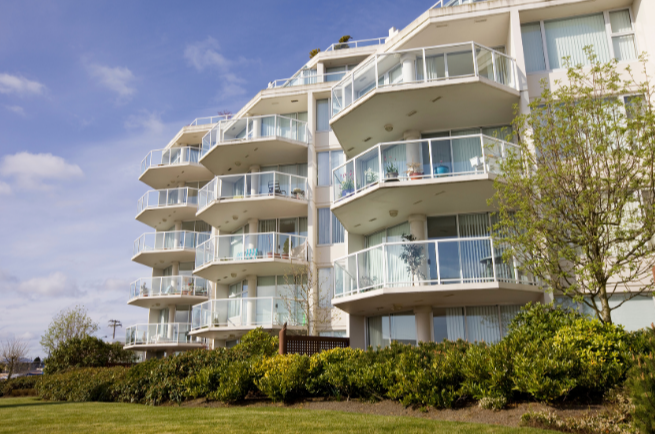
The 1.1.2 licence covers new residential buildings designed under Part 9 of the Construction Code: a multifamily building held in divided co-ownership, with no more than 4 stacked private portions. It requires enrolment in a guarantee plan (r. 8). The trade fields run from the legal framework through foundations, wood-frame structure, envelope, fire protection and mechanicals, to architectural components and sustainable development, and renovation of existing buildings (Part 10) is treated at an awareness level. Larger or Part 3 buildings, and work reserved to specialized licences, fall outside the 1.1.2 scope.
3. Format of the RBQ exam: what to expect
Question type: multiple choice (QCM), single answer
Duration: 3 hours (180 minutes)
Passing grade: 60 %
Languages: French or English
Assessed content: 56 competency elements and 214 skills, including calculation skills
Cognitive level: from comprehension of the code to application on realistic building scenarios
4. Documentation at the exam: open book vs recommended reading
Documents provided at the exam (open book)
Regulation respecting the professional qualification of contractors and owner-builders (RQPECP) — B-1.1, r. 9: licences, subclasses and the guarantor.
Construction Code, Chapter I — Building — B-1.1, r. 2, adopting the amended National Building Code (NBC) 2020.
Regulation respecting the guarantee plan for new residential buildings — B-1.1, r. 8: core subject matter of the 1.1.2.
Recommended reading (know the content — not provided)
Building Act — B-1.1: the objects of the Act, the Régie du bâtiment du Québec and the licence system.
Safety Code for the construction industry (CSTC) — S-2.1, r. 4: worker health and safety on site.
Sustainable Development Act — D-8.1.1: the principles behind the energy and environmental rules.
5. The 10 modules of competency
Prof-RBQ.ca organizes the 56 competency elements into 10 modules and 29 lessons:
Module 1 — Legislative and regulatory framework and guarantee plan
The Building Act, the RBQ, the Construction and Safety Codes, the qualification system (RQPECP) and the Regulation respecting the guarantee plan for new residential buildings (r. 8).
Module 2 — Building design
Reading the objective-based code, areas and spaces, dwelling adaptability and sanitation.
Module 3 — Excavation and building foundations
Excavation, backfill, water management, footings, foundation walls and soil-gas (radon) protection.
Module 4 — Building structure
Loads, deflection, wood-frame strength, notching and drilling limits, and structural execution.
Module 5 — Building envelope
Heat, air and moisture control, vapour barriers, attic venting and envelope execution.
Module 6 — Fire protection and means of escape
Fire-resistance ratings, compartmentalization, limiting distance, egress and firefighter access for new residential buildings.
Module 7 — Building mechanicals
Ventilation, depressurization, HVAC and the electrical and mechanical fields of a residential building.
Module 8 — Architectural and functional components
Stairs, ramps, handrails, guards, doors and windows, partitions and interior finishes.
Module 9 — Renovation, restoration and conversion
Covered at an awareness level: Part 10 of the Code (scope, alterations and change of use of existing buildings) and heritage restoration.
Module 10 — Sustainable development
Energy efficiency (Part 9.36), the Sustainable Development Act, and environmental protection on the jobsite.
6. Key skills and technical requirements (official context)
The guarantee plan for new residential buildings
This is the signature of the 1.1.2. The exam assesses your knowledge of the Regulation (r. 8): what is covered (completion of the work, non-apparent poor workmanship for 1 year, latent defects for 3 years, and design and soil defects for 5 years), the exclusions, the financial caps (deposits, relocation, completion) and the role of the plan manager.
Reading an objective-based Construction Code
The exam tests your ability to find and apply the right article of Chapter I (amended NBC 2020): the structure in Division A (definitions, objectives), Division B (acceptable solutions) and Division C, and the Part 9 scope for new residential buildings.
Structural calculations for wood framing
Expect to compute a specified snow load with S = Cb × Ss + Sr, check joist deflection against L/360, and verify bearing and notching limits. These calculation skills are where many candidates lose marks.
Building science of the envelope
You must place the control layers correctly — rain, air, vapour and thermal — and know that the vapour barrier goes on the warm side, and that roof spaces are vented (Parts 9.25 / 9.19).
Residential fire protection and spatial separation
The exam probes fire-resistance ratings, the required exits of a residential building, and the way limiting distance to the property line governs the allowable area of unprotected openings.
Energy efficiency and thermal bridging
Section 9.36 requires an effective thermal resistance that accounts for thermal bridging through the studs: continuous exterior insulation raises the effective RSI more than the same value placed in the cavity.
7. Preparation strategy and tips to succeed
Prepare module by module: for each rule, learn the article of the code or of the regulation (r. 8) behind it. Drill the calculations until they become automatic, and practise under the real conditions — 3 hours, 60 % to pass, single-answer multiple choice. Because the exam is partly open book, focus your effort on where to find each provided rule quickly, and on memorizing the recommended-reading essentials.
8. Why Prof-RBQ.ca
Prof-RBQ.ca is built around the real 1.1.2 competency profile: 29 structured lessons, more than 200 anchored practice questions (including a lesson and questions dedicated to the guarantee plan), a visual quiz on the key diagrams, and flashcards tied to the exact articles of the Construction Code, the guarantee plan and related Quebec laws. Every explanation cites its source, so you always know why an answer is correct.
Frequently asked questions
What does the RBQ 1.1.2 licence cover?
The RBQ 1.1.2 licence - Contractor - new residential buildings covered by a guarantee plan, Class II (Entrepreneur en batiments residentiels neufs vises a un plan de garantie, classe II) - authorizes general-contractor work on new residential buildings under Part 9 of the Construction Code: a multifamily building held in divided co-ownership (no more than 4 stacked private portions). It covers the legal framework and the guarantee plan, foundations, wood-frame structure, envelope, fire protection, mechanicals, architectural components and sustainable development. Prof-RBQ.ca structures its preparation course around these exact fields.
What is the guarantee plan and why is it central to the RBQ 1.1.2?
The Regulation respecting the guarantee plan for new residential buildings (B-1.1 r. 8) requires the contractor to enrol in a guarantee plan approved by the RBQ. This regulation - provided at the exam and an exam subject in its own right for the 1.1.2 - sets the coverage (completion of the work, poor workmanship, latent defects for 3 years, major defects for 5 years), the exclusions, the financial caps and the role of the plan manager. Prof-RBQ.ca devotes a full lesson to this regulation.
How long is the RBQ 1.1.2 exam?
The RBQ 1.1.2 exam lasts 3 hours (180 minutes). Prof-RBQ.ca timed practice quizzes are built to mirror that length so you learn to pace yourself.
What is the passing grade for the RBQ 1.1.2 exam?
The passing grade is 60 %. The exam is multiple choice (QCM), so Prof-RBQ.ca practice banks report your score against the same 60 % threshold.
Is the RBQ 1.1.2 exam open book or closed book?
It is a partly open-book exam. A short list of official documents is provided at the exam (open book), while other reference documents are recommended reading that you must know but are not handed to you. Knowing which is which is a key part of preparing with Prof-RBQ.ca.
Which documents are provided during the RBQ 1.1.2 exam?
Three documents are generally provided (open book): the Regulation respecting the professional qualification of contractors and owner-builders (RQPECP, B-1.1 r. 9), the Construction Code Chapter I with the amended National Building Code (B-1.1 r. 2), and the Regulation respecting the guarantee plan for new residential buildings (B-1.1 r. 8). Always confirm the current list on your official exam notice.
Which documents should I know but are not provided at the exam?
Recommended-reading documents you should master include the Building Act (B-1.1), the Safety Code for the construction industry (CSTC, S-2.1 r. 4) and the Sustainable Development Act (D-8.1.1). Prof-RBQ.ca lessons quote the key articles from each so you are not memorizing blind.
How many modules and skills does the RBQ 1.1.2 exam assess?
The 1.1.2 competency profile has 56 competency elements and 214 skills, which Prof-RBQ.ca organizes into 10 modules and 29 lessons - from the legal framework and the guarantee plan through foundations, structure, envelope, fire safety, mechanicals, architectural components and sustainable development. Renovation (Part 10) is treated at an awareness level.
Can I take the RBQ 1.1.2 exam in English?
Yes. The exam is offered in French or English, and Prof-RBQ.ca provides a full English version of the 1.1.2 course so English-speaking candidates can prepare in their own language.
Does the RBQ 1.1.2 exam use the NBC 2015 or the NBC 2020?
The Construction Code Chapter I now adopts the amended National Building Code 2020, in force since 17 April 2025 with a transition period to 17 October 2026. Some older exam notices still reference the 2015 edition, so confirm the applicable edition for your exam date. Prof-RBQ.ca anchors its content on the NBC 2020.
Are there calculation questions on the RBQ 1.1.2 exam?
Yes. Expect calculation questions on items such as snow loads (S = Cb x Ss + Sr), joist deflection, footing dimensions, fire-resistance ratings and effective thermal resistance (RSI). Prof-RBQ.ca includes worked calculation examples and flagged CALC questions in its practice banks.
What format are the RBQ 1.1.2 exam questions?
All questions are single-answer multiple choice (QCM). Prof-RBQ.ca practice questions use the same single-answer format, with a short anchored explanation for every question.
How should I prepare for the RBQ 1.1.2 exam?
Work module by module: learn the code article (or regulation r. 8) behind each rule, practise the calculations, and rehearse under the 3-hour, 60 % conditions. Prof-RBQ.ca combines structured lessons, more than 200 practice questions, a visual quiz and flashcards keyed to the exact articles of the Construction Code, the guarantee plan and related laws.