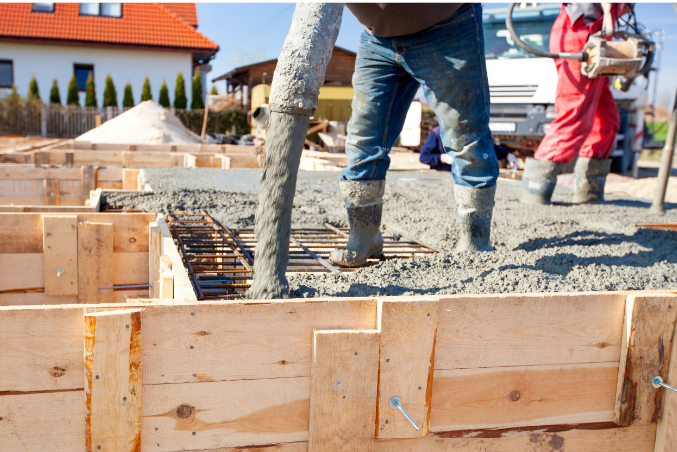
1. About the CCQ Concrete former exam
The Concrete former (Coffreur à béton) qualification exam is the official theoretical evaluation administered by the Commission de la construction du Québec (CCQ). Passing this exam is a key step toward obtaining a journeyman competency certificate and being authorized to work as a concrete former on Quebec construction sites.
The exam covers four sections weighted as follows: Work organization (20%), Footings and foundations (35%), Support, road, and landscape elements (25%), and Slabs, beams, and stairs (20%). It is offered in French and English in multiple-choice format and lasts approximately 3 hours, with a passing grade of 60%.
3. Detailed competency elements
Section 1 — Work organization (20%)
Planning the formwork:
- Interpret plans, specifications, sketches, and installation drawings
- Calculate bearing length
- Determine formwork types and required components
- Plan the work sequence
- Estimate required materials, equipment, and tooling
- Calculate concrete volume
- Site layout
- Material handling techniques
- Communication with crane operators and concrete pump operators
- Worksite health and safety risk prevention
Finalizing the work:
- Verify and adjust the formwork
- Assess the impact of the pour, vibration, troweling, and waterproofing on the formwork
- Wall alignment
- Finalization steps
- Equipment maintenance and cleaning
Section 2 — Footings and foundations (35%)
Erecting footing formwork:
- Soil condition assessment
- Determine footing type and position
- Install footing formwork panels
- Install rebar guides
- Place the key
- Install water-stops
Erecting concrete foundation and wall formwork:
- Assemble panels, ties, struts, and walers
- Install blockouts in the formwork
- Place false structures
- Install nailing keys
- Install offset/drop panels
- Install shoring
- Place walkways
- Formwork alignment method
- Place anchors
- Install pour and expansion joints
Section 3 — Support, road, and landscape elements (25%)
Erecting concrete pier and column formwork:
- Construction and installation of formwork panels
- Place collars
- Fabricate the cleanout trap
- Assemble drop panels and capitals
- Verify squareness and verticality of panels
- Bracing and shoring of formwork
Erecting roadway, sidewalk, curb, and landscape formwork:
- Soil condition assessment
- Interpret the landscape plan
- Calculate concrete volume for various geometric shapes
- Assemble formwork panels for special shapes
- Install expansion joints
- Technical specifications for sidewalks
Section 4 — Slabs, beams, and stairs (20%)
Erecting concrete slab, beam, and stair formwork:
- Install supports and scaffolding
- Place joists or walers
- Assemble beam-bottom and edge-form panels
- Verify alignment, squareness, and leveling of panels
- Assemble blockouts
- Install accessories and ties
- Place pour and expansion joints
- Calculate stair tread height, depth, and the number of treads and risers
- Produce a stair formwork template
- Methods for assembling stair-slab formwork
- Methods for assembling stair-riser formwork
- Construction standards
6. What makes the Concrete former exam different
The Concrete former trade is one of the most calculation-heavy exams on the CCQ roster. Every section involves quantitative work: Section 1 tests bearing length and concrete volume calculations; Section 3 tests geometric volume calculations for non-rectangular shapes (curbs, sidewalks, curved formwork); Section 4 tests stair geometry — calculating tread height, tread depth, and the number of treads and risers from a given rise and run, plus producing a stair template from those numbers. A candidate strong on field execution but weak on the math tends to underperform — and a closed-book exam removes the option to look up a formula.
Section 2 (35%) is the largest single block and reflects the field reality that footings and foundations are the most common formwork work on a Quebec site. The exam tests not only the panels and ties, but everything that goes with a foundation pour: rebar guides, key placement, water-stops, blockouts, false structures, nailing keys, anchors, and pour/expansion joints. A candidate who has only assembled panels but never worked through a complete foundation sequence will struggle.
Section 3 is unusual because it covers roadway and landscape work alongside columns and piers. Sidewalks, curbs, and curved curb formwork involve geometric calculations that look more like math problems than carpentry — and the exam tests them. Section 4's stair geometry is the same kind of problem in a different setting. Because the exam is closed book, the platform also tracks what you've actually memorized — flashcards spaced over multiple sessions surface weak areas before exam day.
Frequently asked questions
What is the CCQ Concrete former qualification exam?
The CCQ qualification exam for the Concrete former (Coffreur à béton) trade is the official theoretical exam administered by the Commission de la construction du Québec to obtain a journeyman competency certificate. It evaluates competencies across four sections: Work organization (20%), Footings and foundations (35%), Support, road, and landscape elements (25%), and Slabs, beams, and stairs (20%).
Is the Concrete former exam open book or closed book?
The CCQ Concrete former exam is entirely closed book. No reference document is provided during the exam and personal documents are not allowed. All formwork rules, concrete volume formulas, and stair geometry calculations must be memorized — focus your preparation on understanding rather than locating information in a manual.
How long is the exam and what is the passing grade?
The CCQ Concrete former exam typically lasts 3 hours and the passing grade is 60%. The exam is offered in French and English in multiple-choice format. Confirm the official details on the CCQ website before your exam date.
What are the four sections of the Concrete former exam?
The exam is divided into four sections: Section 1 — Work organization (20%); Section 2 — Footings and foundations (35%); Section 3 — Support, road, and landscape elements (25%); Section 4 — Slabs, beams, and stairs (20%). Section 2 is the heaviest single block at 35%, and the exam is well-distributed across the trade's full scope.
What does Section 1 — Work organization cover?
Section 1 (20%) covers planning the formwork (interpreting plans, specifications, sketches, and installation drawings; calculating bearing length; determining formwork types and required components; planning the work sequence; estimating materials, equipment, and tooling; calculating concrete volume; site layout; material handling; communication with crane operators and concrete pump operators; site health and safety) and finalizing the work (verifying and adjusting formwork, evaluating impacts of pour, vibration, troweling, and waterproofing on the formwork, wall alignment, finalization steps, equipment maintenance and cleaning).
What does Section 2 — Footings and foundations cover?
Section 2 (35%) covers erecting footing formwork (soil assessment, footing type and position, panel installation, rebar guides, key placement, water-stop installation) and erecting concrete foundation and wall formwork (panels, ties, struts, and walers; formwork blockouts; false structures; nailing keys; offset panels; shoring; walkways; alignment method; anchor placement; pour and expansion joints).
What does Section 3 — Support, road, and landscape elements cover?
Section 3 (25%) covers erecting concrete pier and column formwork (panel construction and installation, collar placement, cleanout trap fabrication, drop panel and capital assembly, panel squareness and verticality, bracing and shoring) and erecting roadway, sidewalk, curb, and landscape formwork (soil assessment, landscape plan interpretation, concrete volume calculation for various geometric shapes, panel assembly for special shapes, expansion joints, technical specifications for sidewalks).
What does Section 4 — Slabs, beams, and stairs cover?
Section 4 (20%) covers erecting concrete slab, beam, and stair formwork: installing supports and scaffolding; placing joists or walers; assembling beam-bottom and edge-form panels; verifying alignment, squareness, and leveling of panels; assembling blockouts; installing accessories and ties; placing pour and expansion joints; calculating stair tread height, depth, and the number of treads and risers; producing a stair formwork template; methods for assembling stair-slab and stair-riser formwork; and applicable construction standards.
What documents are recommended for exam preparation?
The CCQ recommends a substantial reference list: CSA A23.1/A23.2 (Concrete: Materials and Methods of Concrete Construction / Test Methods and Standard Practices for Concrete, 11th edition, 2009, 604 p.); two ASP Construction safety guides (Jacks; Trenches and Excavations); three CEMEQ technical books (Alignment and Levelling, 2010; Footing and Wall Formwork, 2009; Columns, Beams, and Slabs, 2009); the Quebec Construction Code Chapter 1 — Building (with the National Building Code of Canada 2005, amended); the CNESST Tubular Frame Scaffolding guide; the CSST/CNESST Rigging and Lifting Safety Guide (2006); the Quebec Safety Code for Construction Work (S-2.1, r.6); and the Association Béton Québec website. None of these documents are provided at the exam — they are study references only.
Why is calculation work so important on this exam?
Concrete formwork is unusually calculation-heavy across all four sections. Section 1 tests bearing length and concrete volume calculations. Section 3 tests geometric volume calculations for non-rectangular shapes (sidewalks, curbs, curved curbs). Section 4 tests stair geometry — tread height, tread depth, and the number of treads and risers from rise/run dimensions, plus producing a stair template. Together these calculation topics span every section. A candidate who can do the math under time pressure, with no reference book to consult, has a structural advantage on this closed-book exam.
How does Prof-RBQ.ca prepare me for the Concrete former exam?
Prof-RBQ.ca offers an online preparation course aligned with the four official CCQ sections, with practice questions, flashcards, mock exams, and detailed explanations for every wrong answer. The platform mirrors the multiple-choice format of the actual exam so you arrive prepared, with extra emphasis on Section 2 (the heaviest block) and dedicated drilling on the calculation topics — bearing length, concrete volume, geometric shapes, and stair geometry — that span every section.
How do I register for the Concrete former preparation course?
Visit Prof-RBQ.ca to access the Concrete former preparation course. A free section is available so you can try the platform before committing. Pricing and registration are available on Prof-RBQ.ca.