CCQ (EN) — Heavy equipment mechanic
Prepare for the CCQ Heavy equipment mechanic qualification exam with an online course: lessons, quizzes with explained answers and review tools, available anytime for 3 months.
The trade at a glance
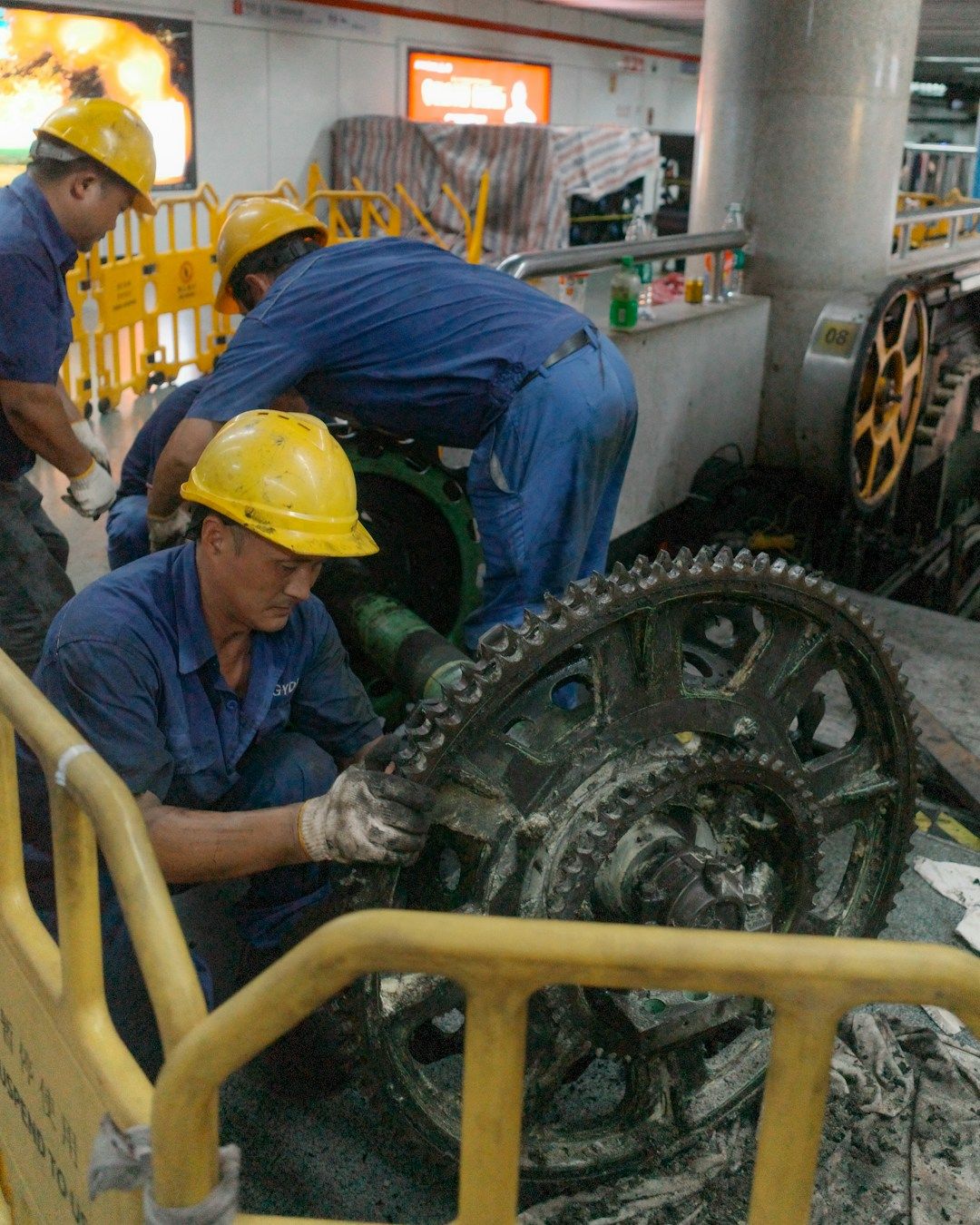
Under the Regulation respecting the vocational training of workforce in the construction industry (R-20, r. 8), a heavy equipment mechanic maintains and repairs cranes, power shovels, graders, spreaders and rollers, among other equipment.
- Schedule B of the regulation sets 3 apprenticeship periods of 2,000 hours (6,000 hours) for this trade.
- Eligible candidates register for the CCQ qualification examination with the Commission (R-20, r. 8, s. 6); the examination pertains to the trade, specialty or shared activity (s. 7).
Please note — This course prepares you for the CCQ qualification exam. Its content is educational: before applying any concept on a job site, consult the codes, regulations and standards in force, which take precedence in case of discrepancy. Some quizzes refer to paid codes, standards or manuals that are not included and may be required; they are available separately from their publishers. If you do not have the document a question refers to, simply skip that question. Prof-RBQ is independent of the CCQ and the RBQ and does not guarantee success on the exam.
Online course
Now
3 months
Course Lessons
CCQ Heavy Equipment Mechanic Qualification Exam Preparation
Online course aligned with the three official sections of the CCQ Heavy equipment mechanic (Mécanicien de machines lourdes) qualification exam — practice questions, flashcards, mock exams, and detailed answer explanations covering engines and fuel systems, electrical/electronic and cab systems, and the full powertrain (clutches, transmissions, hydraulics, pneumatics, brakes).
1. About the CCQ Heavy equipment mechanic exam
The Heavy equipment mechanic (Mécanicien de machines lourdes) qualification exam is the official theoretical evaluation administered by the Commission de la construction du Québec (CCQ). Passing this exam is a key step toward obtaining a journeyman competency certificate and being authorized to maintain and repair heavy construction equipment and heavy vehicles on Quebec construction sites.
The exam covers three sections weighted as follows: Engine, fuel, and exhaust system maintenance and repair (28%), Electrical, electronic, cab, and accessory maintenance and repair (32%), and Powertrain system and component maintenance and repair (40%). It is offered in French and English in multiple-choice format and lasts approximately 3 hours, with a passing grade of 60%.
2. Exam structure at a glance
| Section | Title | Weight | Focus |
|---|---|---|---|
| 1 | Engine, fuel, and exhaust systems | 28 % | Diagnosis, repair, preventive maintenance, engine tune-up |
| 2 | Electrical, electronic, cab, and accessories | 32 % | Charging/starting, ECM, cab HVAC, attachment tools |
| 3 | Powertrain systems and components | 40 % | Clutches, transmissions, chassis, brakes, hydraulics, pneumatics |
Section 3 is the heaviest single block at 40%. The three sections are relatively evenly distributed compared to many CCQ trades — every section is at least 28%, so a candidate weak in one area cannot rely on strength in the other two.
3. Detailed competency elements
Section 1 — Engine, fuel, and exhaust system maintenance and repair (28%)
Preparatory work for maintenance and repair:
- Worksite health and safety risk prevention
- Heat, welding, and cutting operations
- Hydraulic hose assembly
- Environmental risk prevention
Problem diagnosis:
- On engines, fuel systems, exhaust systems, and their components
- Anomaly detection
- Interpretation of data from diagnostic software
- Component pressure and resistance verification
- Functional tests, tests, and inspections
Repair and maintenance:
- Air intake and exhaust circuit repair
- Lubrication and cooling circuit repair
- Engine replacement
- Replacement of various gaskets
- Valve adjustment and engine belt tensioning
- Injection system calibration
- Preventive and periodic maintenance on engines, fuel, and exhaust systems
- Fluid and filter replacement
- Parts lubrication
- Engine and fuel system tune-up
Section 2 — Electrical, electronic, cab, and accessory maintenance and repair (32%)
Electrical and electronic system diagnosis:
- Diagnosis of charging and starting systems
- Battery, connection, alternator, and charging circuit verification
- Electrical schematic interpretation
Electrical and electronic maintenance and repair:
- Repair and replacement of charging and starting systems and their components
- Component replacement (batteries, starters, alternators)
- Lighting equipment repair
- Electronic control module (ECM) sensor installation
- Preventive and periodic maintenance on charging and starting systems
Cab and accessory maintenance and repair:
- Cab and accessory problem diagnosis
- Heating and air-conditioning system repair
- Seat and cab-fastening repair
- Safety equipment, filtration system, and dashboard verification
Attachment tool maintenance and repair:
- Anomaly detection (cracks, leaks)
- Interpretation of data from diagnostic software
- Compliance with manufacturer specifications
- Preventive and periodic maintenance on attachment tools
Section 3 — Powertrain system and component maintenance and repair (40%)
Problem diagnosis:
- On clutches and transmissions
- On chassis, undercarriage, wheels, steering systems, and suspension systems
- On brake systems and their components
- On hydraulic and pneumatic system components
Repair and replacement:
- Clutch systems
- Manual, automatic, and hydrostatic transmissions
- Chassis, undercarriage, steering and suspension systems
- Brake systems
- Hydraulic and pneumatic systems
Preventive and periodic maintenance:
- Clutches and transmissions (manual, automatic, hydrostatic)
- Chassis, undercarriage, and wheels
- Steering and suspension systems
- Brake systems
- Hydraulic and pneumatic systems
4. Documents provided at the exam
This is a defining feature of all CCQ trade qualification exams: unlike RBQ contractor exams (some of which are open book), CCQ exams are systematically closed book regardless of the trade. Plan your study accordingly.
5. Recommended study documents
The CCQ recommends the following references for preparation. None of them will be available during the exam — they are study aids only. Use them to build understanding, then test recall with practice questions and flashcards.
- Collection Mécanique de véhicules lourds routiers (5049) — Modules 7, 11, 12, 18, 21, 24 (3 fascicules), and 28 — CEMEQ (cemeq.qc.ca)
- Collection Mécanique de véhicules lourds routiers (5330) — Compétence 5: Chauffe, soudage et coupage (Heat, Welding and Cutting) — CEMEQ, Sherbrooke, 2011, 222 p.
- Bearings and Seals: A Basic Guide to Failure Diagnosis and Repair — John Deere Publishing, Illinois, 2005, 90 p. (deere.com)
- Electronic and Electrical Systems: A Service, Testing, and Maintenance Guide for Electronic and Electrical Systems in Off-Road Vehicles, Trucks, and Buses — John Deere Publishing, Illinois, 2012, 623 p.
- Engines: Fundamentals of Service — A Service, Testing, and Maintenance Guide for Engine Systems in Off-Road Vehicles, Trucks, and Buses — John Deere Publishing, Illinois, 2009, 495 p.
- Hoses, Tubing and Connectors: A Basic Guide to Their Design, Installation, and Failure Diagnosis — John Deere Publishing, Illinois, 2012, 50 p.
- Guide de vérification mécanique (Mechanical Verification Guide) — Société de l'assurance automobile du Québec (SAAQ), 2011, 96 p. (saaq.gouv.qc.ca)
6. What makes the Heavy equipment mechanic exam different
The Heavy equipment mechanic trade is unusual in its breadth across mechanical subsystems. The exam tests competence on engines (Section 1), electrical and electronic systems including modern ECM-driven controls (Section 2), and an enormous Section 3 covering clutches, manual/automatic/hydrostatic transmissions, chassis, undercarriage, wheels, steering, suspension, brakes, and the hydraulic and pneumatic systems that power most heavy-equipment functions. Few CCQ trades require this much subsystem diversity in a single qualification.
The exam also reflects how modern heavy equipment is computer-controlled. Diagnostic software interpretation appears in Section 1 (engines), Section 2 (electrical and attachment tools), and is implicit throughout Section 3. Most fault-finding now starts with reading codes and sensor data from a diagnostic tool — only then does the technician reach for a wrench. Candidates who learned their trade before ECM systems became universal need to drill the diagnostic-software content specifically.
Section 3 (40%) deserves special attention because of hydraulics. Modern heavy equipment is hydraulically powered — loader buckets, excavator booms, dozer blades, steering, brakes, attachment tools all depend on hydraulic systems. A candidate strong on engines but weak on hydraulics will struggle with Section 3 and likely fail the overall exam. Because the exam is closed book, the platform also tracks what you've actually memorized — flashcards spaced over multiple sessions surface weak areas before exam day.
7. Recommended preparation strategy
- Anchor preparation around Section 3 (40%). The powertrain is the heaviest block and spans the most subsystems. Master clutches, transmissions, chassis/undercarriage, brakes, and especially hydraulics and pneumatics.
- Treat the exam as closed book from day one. Memorize fluid specifications, maintenance intervals, diagnostic fault-code categories, and torque specs — you will not have a manual to consult.
- Read the recommended documents in this order: CEMEQ Modules 7, 11, 12, 18, 21, 24, 28 (the foundation, French-language trade reference), then John Deere's Engines: Fundamentals of Service (Section 1 depth), then Electronic and Electrical Systems (Section 2 depth), then Bearings and Seals and Hoses, Tubing and Connectors (cross-cutting maintenance), then CEMEQ Compétence 5 (welding/cutting), and finally the SAAQ Mechanical Verification Guide for Quebec road-vehicle context.
- Drill diagnostic software interpretation specifically. Cross-section content that appears in every section — high-yield study area.
- Cover all three transmission types. Manual, automatic, and hydrostatic are all tested in Section 3. If your day job covers only one or two, drill the others.
- Master hydraulic and pneumatic fundamentals. Pressure, flow, valves, pumps, actuators, accumulators, hose specifications — these underpin most heavy-equipment functions and most Section 3 questions.
- Take at least two full mock exams under real conditions (3 hours, no documents, single sitting) before scheduling the real exam.
- Review every wrong answer. The Prof-RBQ.ca platform shows the reasoning behind each correct answer — read every explanation, even on questions you got right.
8. Why Prof-RBQ.ca for the Heavy equipment mechanic exam
- Aligned with the official CCQ structure — content mapped one-to-one to the three sections, with extra depth on Section 3 (powertrain and hydraulics) and dedicated drilling on diagnostic-software interpretation across all sections.
- Closed-book training methodology — flashcards and spaced practice designed for memorization, not lookup.
- Mock exams in CCQ format — multiple choice, 3-hour timing, scoring out of 60% — so exam day feels familiar.
- Detailed answer explanations — every question, right or wrong, comes with a written rationale.
- Bilingual — full course in English and French. The CCQ exam itself is offered in both languages.
- A free section is available so you can try the platform before committing.
Get ready for your CCQ Heavy equipment mechanic exam
Online course, mock exams, flashcards, and answer explanations — built for the closed-book CCQ format and the full breadth of heavy-equipment systems.
Access Prof-RBQ.caFrequently asked questions
What is the CCQ Heavy equipment mechanic qualification exam?
The CCQ qualification exam for the Heavy equipment mechanic (Mécanicien de machines lourdes) trade is the official theoretical exam administered by the Commission de la construction du Québec to obtain a journeyman competency certificate. It evaluates competencies across three sections: Engine, fuel, and exhaust system maintenance and repair (28%); Electrical, electronic, cab, and accessory maintenance and repair (32%); and Powertrain system and component maintenance and repair (40%).
Is the Heavy equipment mechanic exam open book or closed book?
The CCQ Heavy equipment mechanic exam is entirely closed book. No reference document is provided during the exam and personal documents are not allowed. Diagnostic sequences, repair procedures, and preventive maintenance schedules across engines, electronics, hydraulics, and powertrain must be memorized — focus your preparation on understanding rather than locating information in a manual.
How long is the exam and what is the passing grade?
The CCQ Heavy equipment mechanic exam typically lasts 3 hours and the passing grade is 60%. The exam is offered in French and English in multiple-choice format. Confirm the official details on the CCQ website before your exam date.
What are the three sections of the exam?
The exam is divided into three sections: Section 1 — Engine, fuel, and exhaust system maintenance and repair (28%); Section 2 — Electrical, electronic, cab, and accessory maintenance and repair (32%); Section 3 — Powertrain system and component maintenance and repair (40%). Section 3 is the heaviest single block — powertrain work is the largest single area of the trade.
What does Section 1 — Engines, fuel, and exhaust cover?
Section 1 (28%) covers preparatory work (worksite health and safety risk prevention, heat/welding/cutting operations, hydraulic hose assembly, environmental risk prevention), problem diagnosis on engines and fuel and exhaust systems (anomaly detection, diagnostic software interpretation, pressure and component-resistance verification, functional tests and inspections), and repair and maintenance (air intake and exhaust circuit repair, lubrication and cooling circuit repair, engine replacement, gasket replacement, valve adjustment and belt tensioning, injection calibration, preventive maintenance, fluid and filter replacement, lubrication, engine tune-up).
What does Section 2 — Electrical, electronic, cab, and accessories cover?
Section 2 (32%) covers electrical/electronic system diagnosis (charging and starting systems, battery and alternator verification, electrical schematic interpretation), electrical/electronic maintenance and repair (charging/starting system repair, component replacement, lighting equipment repair, electronic control module sensor installation, preventive maintenance), cab and accessory work (problem diagnosis, heating and air-conditioning repair, seat and cab-fastening repair, safety equipment, filtration, and dashboard verification), and attachment tool maintenance (anomaly detection such as cracks and leaks, diagnostic software interpretation, manufacturer specifications, preventive maintenance).
What does Section 3 — Powertrain systems cover?
Section 3 (40%) covers problem diagnosis (on clutches and transmissions; on chassis, undercarriage, wheels, steering, and suspension; on brake systems and their components; on hydraulic and pneumatic system components), repair and replacement (clutches, manual/automatic/hydrostatic transmissions, chassis and undercarriage, steering and suspension, brakes, hydraulic and pneumatic systems), and preventive and periodic maintenance (across all the same subsystems plus wheels).
What documents are recommended for exam preparation?
The CCQ recommends seven references: CEMEQ Collection Mécanique de véhicules lourds routiers (5049), Modules 7, 11, 12, 18, 21, 24 (3 fascicules), and 28; CEMEQ Collection Mécanique de véhicules lourds routiers (5330), Compétence 5 — Chauffe, soudage et coupage (2011, 222 p.); John Deere Publishing's Bearings and Seals: A Basic Guide to Failure Diagnosis and Repair (2005, 90 p.); John Deere Publishing's Electronic and Electrical Systems (2012, 623 p.); John Deere Publishing's Engines: Fundamentals of Service (2009, 495 p.); John Deere Publishing's Hoses, Tubing and Connectors (2012, 50 p.); and the SAAQ Guide de vérification mécanique (2011, 96 p.). None of these documents are provided at the exam — they are study references only.
Why does Section 3 weigh 40% on this exam?
Section 3 (Powertrain systems, 40%) is the heaviest block because it spans the largest subsystem family on a heavy machine — clutches, manual/automatic/hydrostatic transmissions, chassis and undercarriage, wheels, steering, suspension, brakes, and the hydraulic and pneumatic systems that power most heavy-equipment functions. Each subsystem has its own diagnostic procedures, repair methods, and preventive maintenance schedules. A candidate strong on engines but weak on hydraulics can fail the exam — the breadth in Section 3 makes uniform competence essential.
How important is diagnostic software interpretation on this exam?
Diagnostic software interpretation appears across Sections 1, 2, and the attachment-tool block of Section 2 — modern heavy equipment is heavily computer-controlled and most fault-finding starts with diagnostic-tool data. Candidates need to understand how to read fault codes, interpret sensor readings, and use the data to narrow down a problem before reaching for a wrench. Field-experienced candidates who have never used diagnostic software systematically should drill this content specifically.
How does Prof-RBQ.ca prepare me for the Heavy equipment mechanic exam?
Prof-RBQ.ca offers an online preparation course aligned with the three official CCQ sections, with practice questions, flashcards, mock exams, and detailed explanations for every wrong answer. The platform mirrors the multiple-choice format of the actual exam so you arrive prepared, with extra emphasis on Section 3 (the heaviest powertrain block) and dedicated coverage of diagnostic-software interpretation, hydraulic and pneumatic systems, and the electrical/electronic content from Section 2.
How do I register for the Heavy equipment mechanic preparation course?
Visit Prof-RBQ.ca to access the Heavy equipment mechanic preparation course. A free section is available so you can try the platform before committing. Pricing and registration are available on Prof-RBQ.ca.