
CCQ (EN) — Resilient flooring layer
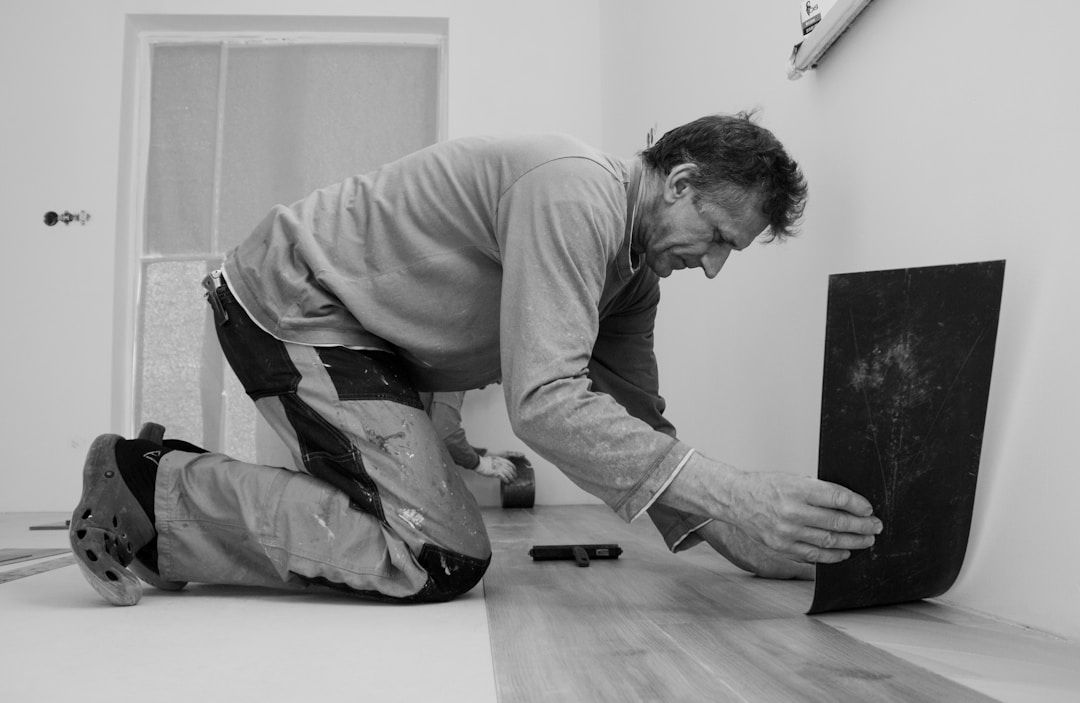
Prepare for the CCQ Resilient flooring layer qualification exam with an online course: lessons, quizzes with explained answers and review tools, available anytime for 3 months.
The trade at a glance
Under the Regulation respecting the vocational training of workforce in the construction industry (R-20, r. 8), a resilient flooring layer lays resilient flooring made of vinyl, asphalt, rubber, cork and similar materials.
- Schedule B of the regulation sets 3 apprenticeship periods of 2,000 hours (6,000 hours) for this trade.
- Eligible candidates register for the CCQ qualification examination with the Commission (R-20, r. 8, s. 6); the examination pertains to the trade, specialty or shared activity (s. 7).
Please note — This course prepares you for the CCQ qualification exam. Its content is educational: before applying any concept on a job site, consult the codes, regulations and standards in force, which take precedence in case of discrepancy. Some quizzes refer to paid codes, standards or manuals that are not included and may be required; they are available separately from their publishers. If you do not have the document a question refers to, simply skip that question. Prof-RBQ is independent of the CCQ and the RBQ and does not guarantee success on the exam.
Online course
Now
3 months
Course Lessons
CCQ Resilient Flooring Layer Qualification Exam Preparation
Online course aligned with the three official sections of the CCQ Resilient flooring layer (Poseur de revêtements souples) qualification exam — practice questions, flashcards, mock exams, and detailed answer explanations grounded in CRI carpet installation standards and major manufacturer installation handbooks (Armstrong, Mannington, Tarkett).
1. About the CCQ Resilient flooring layer exam
The Resilient flooring layer (Poseur de revêtements souples) qualification exam is the official theoretical evaluation administered by the Commission de la construction du Québec (CCQ). Resilient flooring layers install and repair soft floor coverings on Quebec construction sites — glued and stretched carpet in rolls and tiles, synthetic turf with lines and logos, and resilient sheet and tile flooring (vinyl, LVT, linoleum, and similar materials). Passing this exam is a key step toward obtaining a journeyman competency certificate.
The exam covers three sections weighted as follows: Preparing the worksite and surfaces (20%), Installing and repairing carpet and synthetic turf (35%), and Installing and repairing resilient covering in rolls and tiles other than carpet (45%). It is offered in French and English in multiple-choice format and lasts approximately 3 hours, with a passing grade of 60%.
2. Exam structure at a glance
| Section | Title | Weight | Focus |
|---|---|---|---|
| 1 | Preparing the worksite and surfaces | 20 % | Safety, PPE, plan reading, surface prep, patching (ragréage) |
| 2 | Installing and repairing carpet and synthetic turf | 35 % | Glued carpet, stretched carpet, synthetic turf — install and repair |
| 3 | Installing and repairing resilient covering (other than carpet) | 45 % | Vinyl sheet, vinyl tile, LVT, cove bases, insertions, repair |
Section 3 dominates with nearly half the score — resilient sheet and tile flooring is the largest segment of the trade. Section 2 covers the three carpet and turf categories together, and Section 1 covers the surface preparation that all installations depend on.
3. Detailed competency elements
Section 1 — Preparing the worksite and surfaces (20%)
- Apply trade-specific health and safety rules — site accessibility, work environment protection
- Wear correct PPE and handle products safely
- Review site specifications — verify premises and materials (condition and quantity), read plans
- Prepare the surface — remove existing covering, clean the surface, verify the surface
- Correct floor and wall surface defects (ragréage — patching and leveling)
Section 2 — Installing and repairing carpet (glued rolls, glued tiles, stretched) and synthetic turf (35%)
- Install glued carpet in rolls and tiles — position the carpet, apply adhesive, finish, including installation on stairs
- Install stretched carpet — install tack strips, lay underlay, position the carpet, finish
- Repair previously installed glued and stretched carpet — analyze defect causes and perform the repair
- Install synthetic turf — prepare surfaces, lay the covering, install insertions (lines, numbers, logos), perform infill and finishing
- Repair previously installed synthetic turf — analyze defect causes and perform the repair
Section 3 — Installing and repairing resilient covering in rolls and tiles other than carpet (45%)
- Install resilient covering (sheet or tile — vinyl, LVT, linoleum, similar materials)
- Determine the starting point of the installation
- Make cove bases (remontées) where the covering rises up the wall
- Install insertions
- Prepare and lay the covering
- Glue the covering
- Perform the finishing
- Repair previously installed resilient covering — analyze defect causes and perform the repair
4. Documents provided at the exam
This is a defining feature of all CCQ trade qualification exams: unlike RBQ contractor exams (some of which are open book), CCQ exams are systematically closed book regardless of the trade. Plan your study accordingly.
5. Recommended study documents
The CCQ recommends the following references for preparation — three of the four are available in English only. None of them will be available during the exam — they are study aids only. Use them to build understanding, then test recall with practice questions and flashcards.
- CRI Carpet Installation Standard 2011 — Carpet and Rug Institute (carpet-rug.org), English only — the principal North American carpet installation standard
- 2010 Professional Installation Handbook — Mannington (mannington.com), English only — manufacturer installation handbook for Mannington resilient and soft surface products
- Armstrong World Industries installation resources — Armstrong Flooring (armstrongflooring.com/en-us) — manufacturer installation guidance for Armstrong resilient products
- Tarkett Inc. installation resources — Tarkett (tarkett.com), English only — manufacturer installation guidance for Tarkett resilient and carpet products
6. What makes the Resilient flooring layer exam different
This trade covers a wider material range than most CCQ trades: three distinct covering families, each with its own installation discipline. Glued carpet (rolled and tiled) demands clean adhesive spread, correct trowel notch, and pile alignment — including the specialized case of carpet on stairs. Stretched carpet relies on tack strips, underlay, and power stretching to achieve a flat, wrinkle-free installation. Synthetic turf adds an entirely different skill set: seaming long runs of turf, installing line, number, and logo insertions for sports applications, and the infill and finishing operations that turf demands. Resilient flooring in Section 3 (vinyl sheet, LVT, linoleum) is the largest and most technically demanding category — starting points, cove base work, insertions, and the wide variety of adhesives required by different substrates and materials.
Section 3 weighing 45% reflects the field reality of the trade. Resilient flooring is by volume the most common installation type, and it carries the highest expectations for visual quality — narrow tile widths at walls, mismatched seams, and visible substrate telegraphs are all rejected on inspection. Determining the correct starting point and layout is a high-yield exam topic because it sets the success of the entire installation.
Surface preparation (Section 1, 20%) is the silent foundation of every covering installation. Ragréage — patching and leveling floor and wall surface defects — is a specific competency tested directly. Every installation that follows depends on a flat, clean, dry substrate; the exam tests the candidate's ability to identify when correction is required and what technique applies.
Repair work is tested as a diagnostic competency in both Section 2 and Section 3. Each repair starts with analyzing the cause of the defect — adhesive failure, subfloor moisture, seam separation, stretch loss, traffic wear — before applying the correction. Field-experienced installers know how to repair; the exam tests whether they can articulate the diagnostic logic.
The recommended references are almost entirely English-language industry and manufacturer sources. The CRI Carpet Installation Standard 2011 is the only true industry standard listed; the others are manufacturer handbooks (Armstrong, Mannington, Tarkett). Candidates working in French still benefit from familiarity with CRI terminology and procedures, which underpin most Section 2 carpet questions.
7. Recommended preparation strategy
- Prioritize Section 3 (45%). Resilient sheet and tile is the largest exam category. Master starting-point determination, cove base (remontée) techniques, insertion installation, adhesive selection by substrate and material, and the finishing operations specific to vinyl sheet, LVT, and tile.
- Treat the exam as closed book from day one. Memorize adhesive types and spread rates, stretching procedures, seaming techniques, and cove base details — you will not have a manufacturer handbook to consult.
- Cover all three carpet/turf families in Section 2 separately. Glued carpet (rolls and tiles, including stairs), stretched carpet (tack strips, underlay), and synthetic turf (insertions, infill) each have their own rules. Strength on one does not compensate for weakness on another.
- Don't underweight Section 1. Surface preparation is 20% of the score, and ragréage is a specific tested competency. Memorize what acceptable substrates look like, what defects require correction, and which patching/leveling technique applies.
- Read the recommended references in this order: CRI Carpet Installation Standard 2011 (the foundation for Section 2 carpet), then manufacturer handbooks (Mannington, Armstrong, Tarkett) for resilient flooring procedures (Section 3) and additional carpet detail. All four are English-language; candidates working in French should learn the standard terminology in both languages.
- Drill repair scenarios. Both Section 2 and Section 3 test the ability to diagnose defects — bubbling, lifting, seam separation, stretch loss — before applying the repair. Memorize the common failure modes for each covering type.
- Take at least two full mock exams under real conditions (3 hours, no documents, single sitting) before scheduling the real exam.
- Review every wrong answer. The Prof-RBQ.ca platform shows the reasoning behind each correct answer — read every explanation, even on questions you got right.
8. Why Prof-RBQ.ca for the Resilient flooring layer exam
- Aligned with the official CCQ structure — content mapped one-to-one to the three sections, with heavy emphasis on Section 3 (45% of the score) and dedicated coverage of all three carpet/turf families in Section 2.
- Closed-book training methodology — flashcards and spaced practice designed for memorization of adhesives, spread rates, stretching procedures, cove base techniques, and ragréage rules.
- Mock exams in CCQ format — multiple choice, 3-hour timing, scoring out of 60% — so exam day feels familiar.
- Detailed answer explanations — every question, right or wrong, comes with a written rationale tied back to the relevant CRI rule or manufacturer recommendation.
- Bilingual — full course in English and French. The CCQ exam itself is offered in both languages, and we bridge English-only manufacturer terminology for French candidates.
- A free section is available so you can try the platform before committing.
Get ready for your CCQ Resilient flooring layer exam
Online course, mock exams, flashcards, and answer explanations — built around CRI carpet standards, manufacturer installation handbooks, and the closed-book CCQ format.
Access Prof-RBQ.caFrequently asked questions
What is the CCQ Resilient flooring layer qualification exam?
The CCQ qualification exam for the Resilient flooring layer (Poseur de revêtements souples) trade is the official theoretical exam administered by the Commission de la construction du Québec to obtain a journeyman competency certificate. The trade covers the installation and repair of soft floor coverings on Quebec construction sites — glued and stretched carpet in rolls and tiles, synthetic turf with lines and logos, and resilient sheet and tile flooring (vinyl, LVT, and similar materials). The exam evaluates competencies across three sections: Preparing the worksite and surfaces (20%), Installing and repairing carpet and synthetic turf (35%), and Installing and repairing resilient covering in rolls and tiles other than carpet (45%).
Is the Resilient flooring layer exam open book or closed book?
The CCQ Resilient flooring layer exam is entirely closed book. No reference document is provided during the exam and personal documents are not allowed. Subfloor preparation rules, adhesive selection, seaming procedures, stretching techniques, cove base installation, and manufacturer recommendations must be memorized — focus your preparation on understanding rather than locating information in a manual.
How long is the exam and what is the passing grade?
The CCQ Resilient flooring layer exam typically lasts 3 hours and the passing grade is 60%. The exam is offered in French and English in multiple-choice format. Confirm the official details on the CCQ website before your exam date.
What are the three sections of the exam?
The exam is divided into three sections: Section 1 — Preparing the worksite and surfaces (20%); Section 2 — Installing and repairing carpet (glued rolls, glued tiles, stretched) and synthetic turf (35%); Section 3 — Installing and repairing resilient covering in rolls and tiles other than carpet (45%). Section 3 dominates with nearly half the score — resilient sheet and tile (vinyl, LVT) is the largest part of the trade. Section 2 covers the carpet and synthetic turf installations, and Section 1 covers the surface preparation work that all three covering types depend on.
What does Section 1 — Preparing the worksite and surfaces cover?
Section 1 (20%) covers applying trade-specific health and safety rules (site accessibility, work environment protection, correct PPE selection, safe product handling); reviewing site specifications (verifying premises and materials by condition and quantity, reading plans); and preparing the surface (removing existing covering, cleaning, verifying the surface, and correcting floor and wall surface defects through patching and leveling — ragréage). This preparation phase is critical because every covering installation that follows depends on a flat, clean, dry, and structurally sound substrate.
What does Section 2 — Installing and repairing carpet and synthetic turf cover?
Section 2 (35%) covers three material categories. Glued carpet (rolled and tiled) — positioning the carpet, applying adhesive, finishing, and the special case of installing rolled and tiled glued carpet on stairs. Stretched carpet — installing tack strips, laying underlay, positioning the carpet, and finishing. Synthetic turf — preparing the surface, laying the covering, installing insertions (lines, numbers, logos), and performing infill and finishing. The section also covers repair work: analyzing the causes of a defect and performing the repair on previously installed glued or stretched carpet and on installed synthetic turf.
What does Section 3 — Installing and repairing resilient covering cover?
Section 3 (45%) covers resilient covering in rolls and tiles other than carpet — vinyl sheet goods, vinyl tiles, luxury vinyl tile (LVT), linoleum, and similar resilient materials. The competency elements are: determining the starting point of the installation; making cove bases (remontées) where the covering rises up the wall; installing insertions; preparing and laying the covering; gluing the covering; and performing the finishing. The section also covers repair work: analyzing the causes of a defect and performing the repair on previously installed resilient covering.
What documents are recommended for exam preparation?
The CCQ recommends four references, all manufacturer or industry-association resources: Armstrong World Industries (armstrongflooring.com) for resilient flooring installation guidance; the Carpet and Rug Institute's CRI Carpet Installation Standard 2011 (carpet-rug.org, English only) — the principal North American carpet installation standard; Mannington's 2010 Professional Installation Handbook (mannington.com, English only); and Tarkett Inc. (tarkett.com, English only). None of these documents are provided at the exam — they are study references only. Three of the four are available in English only.
Why is the CRI Carpet Installation Standard important for this exam?
The Carpet and Rug Institute's CRI Carpet Installation Standard 2011 is the principal industry standard for carpet installation in North America. It governs subfloor requirements, adhesive selection and spread rates, seaming techniques, stretching procedures for tackless installations, pile direction, transitions, and post-installation conditions. Most Section 2 questions on glued and stretched carpet trace back to CRI rules. Because the exam is closed book and the standard is only available in English, candidates working in French still benefit from familiarity with CRI terminology and procedures.
Why does Section 3 weigh 45%?
Section 3 (45%) reflects the field reality that resilient flooring — vinyl sheet, vinyl tile, LVT, and linoleum — is the largest segment of the soft-covering trade by both volume and complexity. The covering types in Section 3 demand strict attention to starting points and layout (to avoid narrow tile widths at walls), accurate cove base work where the covering wraps up the wall (remontées), insertion work, and adhesive selection appropriate to the material and substrate. Carpet and synthetic turf together account for 35%, and surface preparation accounts for 20%. The exam reflects that distribution by putting nearly half the score on Section 3.
Why is surface preparation weighted at 20%?
Section 1 (20%) covers surface preparation — removing existing covering, cleaning, verifying, and patching (ragréage) the substrate — because every soft covering installation that follows depends on it. A perfect carpet installation over a defective subfloor will telegraph the defects within months; a resilient sheet glued to a contaminated substrate will release. The exam tests the candidate's ability to identify when a substrate is acceptable, when it requires correction, and what correction technique applies. Field-experienced installers know to never skip surface prep — the exam tests whether they can articulate the rules.
How does Prof-RBQ.ca prepare me for the Resilient flooring layer exam?
Prof-RBQ.ca offers an online preparation course aligned with the three official CCQ sections, with practice questions, flashcards, mock exams, and detailed explanations for every wrong answer. The platform mirrors the multiple-choice format of the actual exam so you arrive prepared, with heavy emphasis on Section 3 (45% of the score) covering resilient sheet and tile installation, plus dedicated coverage of Section 2's three carpet/turf categories (glued, stretched, synthetic turf) and the subfloor preparation rules of Section 1 (ragréage, cleaning, verification).