CCQ (EN) — Roofer
Prepare for the CCQ Roofer qualification exam with an online course: lessons, quizzes with explained answers and review tools, available anytime for 3 months.
The trade at a glance
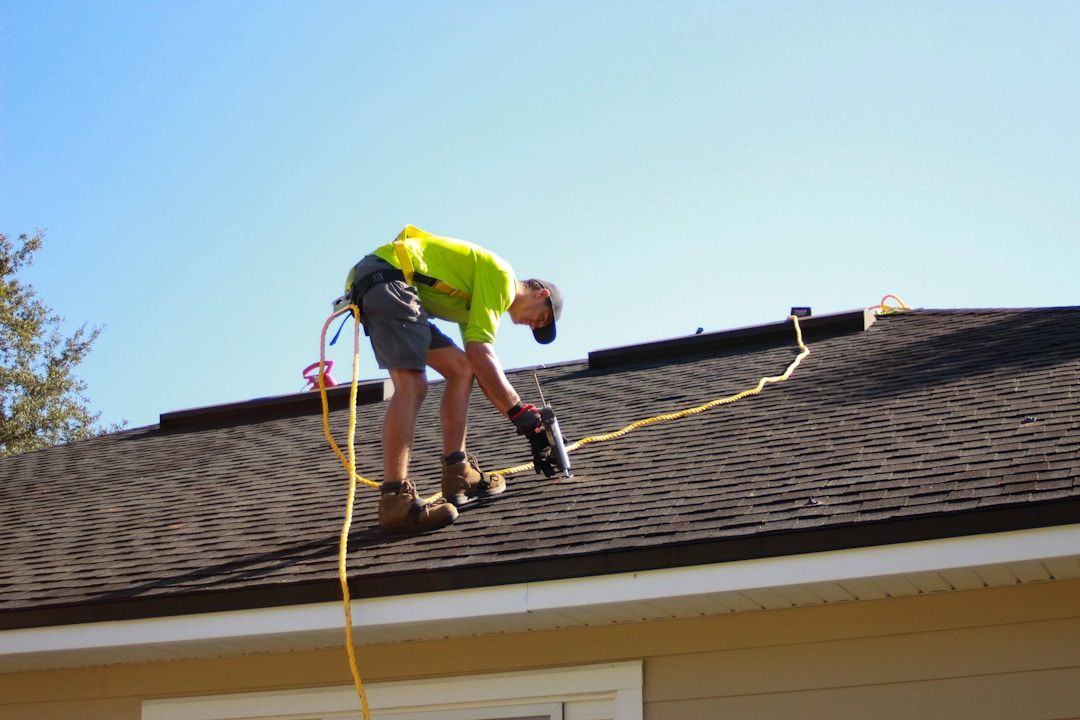
Under the Regulation respecting the vocational training of workforce in the construction industry (R-20, r. 8), a roofer applies and lays roofing materials such as asphalt composition, gravel, shingles and tiles.
- Schedule B of the regulation sets 2 apprenticeship periods of 2,000 hours (4,000 hours) for this trade.
- Eligible candidates register for the CCQ qualification examination with the Commission (R-20, r. 8, s. 6); the examination pertains to the trade, specialty or shared activity (s. 7).
Please note — This course prepares you for the CCQ qualification exam. Its content is educational: before applying any concept on a job site, consult the codes, regulations and standards in force, which take precedence in case of discrepancy. Some quizzes refer to paid codes, standards or manuals that are not included and may be required; they are available separately from their publishers. If you do not have the document a question refers to, simply skip that question. Prof-RBQ is independent of the CCQ and the RBQ and does not guarantee success on the exam.
Online course
Now
3 months
Course Lessons
CCQ Roofer Qualification Exam Preparation
Online course aligned with the three official sections of the CCQ Roofer (Couvreur) qualification exam — practice questions, flashcards, mock exams, and detailed answer explanations covering all major membrane systems (TPO, PVC, EPDM, elastomeric, asphalt-gravel, Hydrotech) and asphalt shingles.
1. About the CCQ Roofer exam
The Roofer (Couvreur) qualification exam is the official theoretical evaluation administered by the Commission de la construction du Québec (CCQ). Passing this exam is a key step toward obtaining a journeyman competency certificate and being authorized to work as a roofer on Quebec construction sites.
The exam covers three sections weighted as follows: Organizing the work (17%), Preparing the roofing installation (18%), and Installing and repairing roofing (65%). It is offered in French and English in multiple-choice format and lasts approximately 3 hours, with a passing grade of 60%.
2. Exam structure at a glance
| Section | Title | Weight | Focus |
|---|---|---|---|
| 1 | Organizing the work | 17 % | Slope plans, system characteristics, calculations, material handling, safety |
| 2 | Preparing the roofing installation | 18 % | Decking, vapor barrier, insulation, drip edge, flashings, accessories |
| 3 | Installing and repairing roofing | 65 % | All membrane systems, shingles, roof analysis and repair |
Section 3 dominates this exam to an unusual degree — at 65%, it is one of the heaviest single sections on the entire CCQ roster. Sections 1 and 2 are nearly equal at 17% and 18% but together still come to less than half of Section 3's weight. Anchor your preparation around Section 3.
3. Detailed competency elements
Section 1 — Organizing the work (17%)
Planning the work:
- Interpret a slope plan
- Distinguish the characteristics of different systems and membranes
- Calculate the quantity of material required for a given task
- Secure the worksite
Preparing the materials:
- Organize material handling to the roof
- Use appropriate equipment correctly and safely
Section 2 — Preparing the roofing installation (18%)
Preparing the roof:
- Prepare the decking and curbs
Preparing the membrane installation on insulated, inverted, or ventilated roofs:
- Lay the vapor barrier
- Lay the insulation
- Lay the support panel
Preparing the shingle installation:
- Mark reference points
- Install drip edges and underlayment membranes
- Install flashings and roof accessories
Section 3 — Installing and repairing roofing (65%)
Installing a membrane on insulated, inverted, or ventilated roofs:
- Lay a single-ply membrane (TPO, PVC, EPDM)
- Lay an elastomeric two-ply membrane
- Lay a multi-ply membrane (asphalt and gravel)
- Lay a liquid-applied membrane (Hydrotech)
- Waterproof the roof at drains and projections
Installing shingles:
- Install asphalt shingles
Repairing a membrane on insulated, inverted, or ventilated roofs:
- Analyze the existing roof
- Proceed with the roof repair
Repairing shingle roofing:
- Repair an asphalt shingle roof
4. Documents provided at the exam
This is a defining feature of all CCQ trade qualification exams: unlike RBQ contractor exams (some of which are open book), CCQ exams are systematically closed book regardless of the trade. Plan your study accordingly.
5. Recommended study documents
The CCQ suggests the following references for preparation. None of them will be available during the exam — they are study aids only. Use them to build understanding, then test recall with practice questions and flashcards.
- Canadian Roofing Reference Manual — Canadian Roofing Contractors Association (CRCA / ACEC), Ottawa, 1999, 678 p. (roofingcanada.com — also publishes additional technical bulletins)
- Technical specifications for roofing installation — Association des maîtres couvreurs du Québec (AMCQ) (amcq.qc.ca)
- IKO technical sheets — installation guides for various membranes and shingles (iko.com)
- BP Canada technical sheets — installation guides for various membranes and shingles (bpcan.com)
- SOPREMA Roofer's Guide — SOPREMA, 2014, 101 p. (soprema.ca — also publishes additional technical bulletins)
6. What makes the Roofer exam different
The Roofer trade has the most installation-heavy exam on the CCQ roster. Section 3 alone is 65% of the score — nearly two-thirds of the entire exam — and it tests competence across five distinct membrane systems plus asphalt shingles. Single-ply systems (TPO, PVC, EPDM) use heat-welding or seam-bonding methods; elastomeric two-ply membranes are torch-applied; multi-ply asphalt-and-gravel systems use hot bitumen; liquid-applied membranes like Hydrotech use yet another application method; and asphalt shingles are a separate craft. Few CCQ trades require this much breadth at the installation level.
The exam also reflects the manufacturer-specific reality of modern roofing. Each major supplier (IKO, BP Canada, SOPREMA) publishes its own technical sheets covering exactly how to install its membrane and shingle products — and the CCQ explicitly points candidates to these documents. A roofer who only works with one manufacturer's system at their day job needs to broaden their study to cover the full range of methods, because the exam doesn't favor any single supplier.
Section 3 also includes diagnostic and repair work on existing roofs — analyzing an existing roof, identifying the cause of a failure, and selecting an appropriate repair method. This is harder than new installation because the candidate has to reason backward from observed symptoms. Because the exam is closed book, the platform also tracks what you've actually memorized — flashcards spaced over multiple sessions surface weak areas before exam day.
7. Recommended preparation strategy
- Anchor preparation around Section 3 (65%). No other CCQ trade has a single section this heavily weighted — it alone determines whether you pass.
- Treat the exam as closed book from day one. Memorize membrane application temperatures, fastener spacings, lap dimensions, and shingle exposure rules — you will not have a manual to consult.
- Cover all five membrane systems plus shingles. If your day job is only torch-down membrane, drill TPO/PVC/EPDM and Hydrotech. If you mostly do shingles, drill the membrane systems. The exam doesn't favor any single specialty.
- Read the recommended documents in this order: CRCA Canadian Roofing Reference Manual (the foundation — covers all systems), then AMCQ technical specifications (Quebec-specific practice), then SOPREMA Roofer's Guide (modern Quebec-market reference), then IKO and BP Canada technical sheets for product-specific details.
- Drill repair-and-diagnosis questions. Section 3's repair content is where field experience pays off if combined with a structured understanding of failure modes for each membrane system.
- Take at least two full mock exams under real conditions (3 hours, no documents, single sitting) before scheduling the real exam.
- Review every wrong answer. The Prof-RBQ.ca platform shows the reasoning behind each correct answer — read every explanation, even on questions you got right.
8. Why Prof-RBQ.ca for the Roofer exam
- Aligned with the official CCQ structure — content mapped one-to-one to the three sections, with extra depth on Section 3's installation and repair content across all five membrane systems plus shingles.
- Closed-book training methodology — flashcards and spaced practice designed for memorization, not lookup.
- Mock exams in CCQ format — multiple choice, 3-hour timing, scoring out of 60% — so exam day feels familiar.
- Detailed answer explanations — every question, right or wrong, comes with a written rationale.
- Bilingual — full course in English and French. The CCQ exam itself is offered in both languages.
- A free section is available so you can try the platform before committing.
Get ready for your CCQ Roofer exam
Online course, mock exams, flashcards, and answer explanations — built for the closed-book CCQ format and the full breadth of membrane and shingle systems.
Access Prof-RBQ.caFrequently asked questions
What is the CCQ Roofer qualification exam?
The CCQ qualification exam for the Roofer (Couvreur) trade is the official theoretical exam administered by the Commission de la construction du Québec to obtain a journeyman competency certificate. It evaluates competencies across three sections: Organizing the work (17%), Preparing the roofing installation (18%), and Installing and repairing roofing (65%).
Is the Roofer exam open book or closed book?
The CCQ Roofer exam is entirely closed book. No reference document is provided during the exam and personal documents are not allowed. All study materials must be memorized — focus your preparation on understanding rather than locating information in a manual.
How long is the exam and what is the passing grade?
The CCQ Roofer exam typically lasts 3 hours and the passing grade is 60%. The exam is offered in French and English in multiple-choice format. Confirm the official details on the CCQ website before your exam date.
What are the three sections of the Roofer exam?
The exam is divided into three sections: Section 1 — Organizing the work (17%); Section 2 — Preparing the roofing installation (18%); Section 3 — Installing and repairing roofing (65%). Section 3 is overwhelmingly dominant — it accounts for nearly two-thirds of the entire exam, which is unusual on the CCQ roster.
What does Section 1 — Organizing the work cover?
Section 1 (17%) covers planning the work (interpreting a slope plan, distinguishing the characteristics of different systems and membranes, calculating material quantities for a given task, securing the worksite) and preparing the materials (organizing material handling to the roof, using appropriate equipment safely).
What does Section 2 — Preparing the roofing installation cover?
Section 2 (18%) covers preparing the roof (decking and curb preparation), preparing the membrane installation on insulated, inverted, or ventilated roofs (laying the vapor barrier, insulation, and support panel), and preparing the shingle installation (marking reference points, installing drip edges and underlayment membranes, installing flashings and roof accessories).
What does Section 3 — Installing and repairing roofing cover?
Section 3 (65%) covers installing membranes on insulated, inverted, or ventilated roofs (single-ply membranes such as TPO, PVC, and EPDM; elastomeric two-ply membranes; multi-ply asphalt-and-gravel membranes; liquid-applied membranes such as Hydrotech; roof waterproofing at drains and projections), installing asphalt shingles, repairing membranes (analyzing the existing roof and proceeding with the repair), and repairing asphalt shingle roofing.
What documents are recommended for exam preparation?
The CCQ recommends five references: the Canadian Roofing Contractors Association (CRCA / ACEC) Canadian Roofing Reference Manual (Ottawa, 1999, 678 p.); the Association des maîtres couvreurs du Québec (AMCQ) technical specifications for roofing installation; IKO technical sheets for membrane and shingle installation; BP Canada technical sheets for membrane and shingle installation; and the SOPREMA Roofer's Guide (2014, 101 p.). None of these documents are provided at the exam — they are study references only.
Why is Section 3 so dominant on this exam?
Section 3 represents 65% of the exam — an unusually heavy weighting on the CCQ roster. The reason is that the Roofer trade encompasses a wide range of distinct membrane systems that share little in common at the installation level: single-ply systems (TPO, PVC, EPDM) use heat-welding or seam-bonding techniques; elastomeric two-ply membranes use torch application; multi-ply asphalt-and-gravel systems use hot bitumen; liquid-applied membranes like Hydrotech use a different application method again; and asphalt shingles are a separate craft entirely. The exam tests competence across all of these — and that breadth justifies the 65% weighting.
How does Prof-RBQ.ca prepare me for the Roofer exam?
Prof-RBQ.ca offers an online preparation course aligned with the three official CCQ sections, with practice questions, flashcards, mock exams, and detailed explanations for every wrong answer. The platform mirrors the multiple-choice format of the actual exam so you arrive prepared, with extra emphasis on Section 3's heavy 65% weighting and dedicated coverage of all five major membrane systems plus shingles, so candidates from any specialty are ready for the full scope.
Is the preparation course available in English?
Yes. Prof-RBQ.ca offers the Roofer preparation in English and French. The official CCQ exam is also offered in both languages — choose your exam language when registering with the CCQ.
How do I register for the Roofer preparation course?
Visit Prof-RBQ.ca to access the Roofer preparation course. A free section is available so you can try the platform before committing. Pricing and registration are available on Prof-RBQ.ca.