CCQ (EN) — Shovel operator
🎁 Try before you buy
Create your free account (no credit card required) and get immediate access to the first lessons of this course. Explore the lessons, try the quiz and see if our approach works for you. Purchase the course only if you're satisfied.
Try for freePrepare for the CCQ Shovel operator qualification exam with an online course: lessons, quizzes with explained answers and review tools, available anytime for 3 months.
The trade at a glance
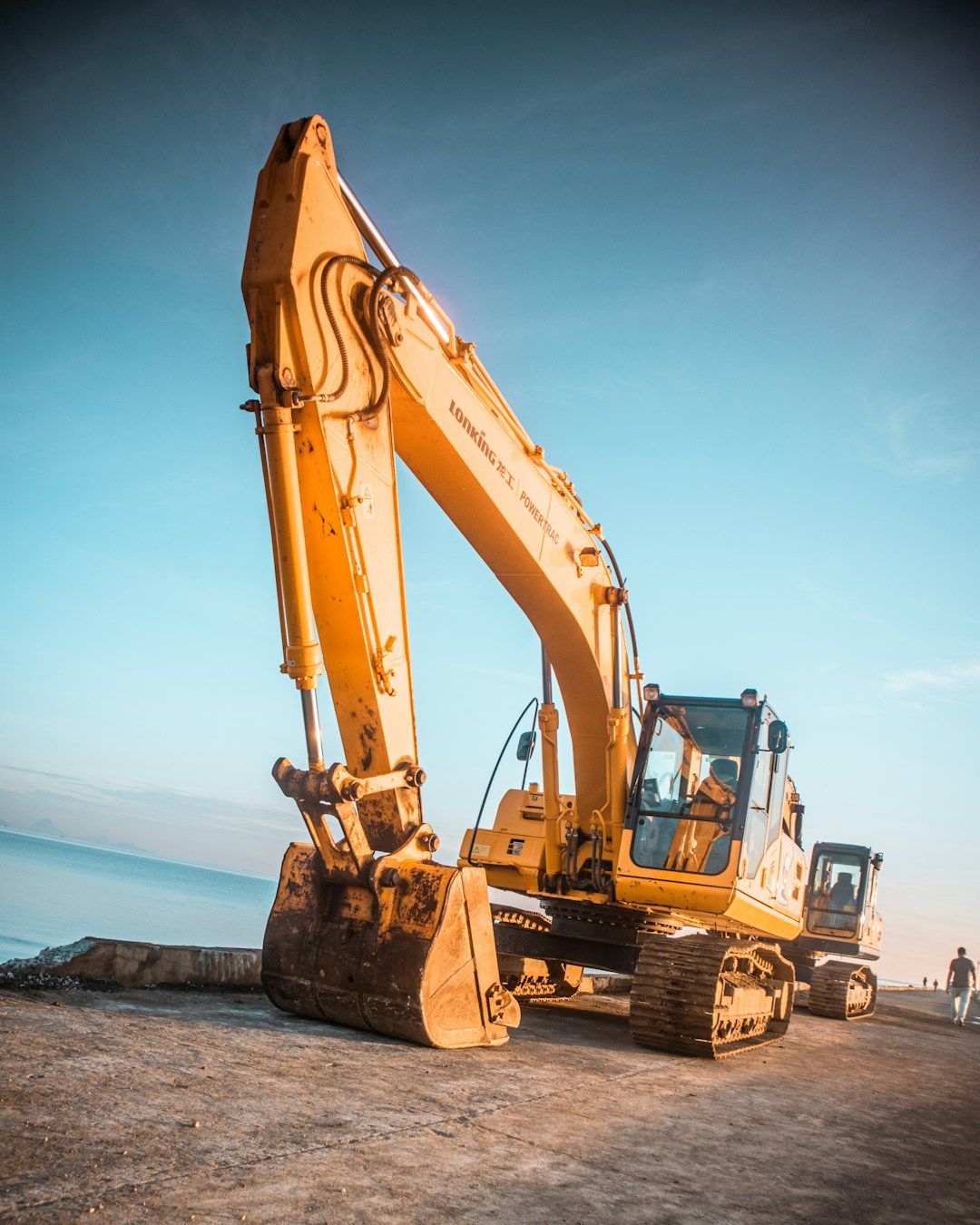
Under the Regulation respecting the vocational training of workforce in the construction industry (R-20, r. 8), a shovel operator operates all types of shovels, backhoes and cranes with clamshell or dragline attachments.
- Schedule B of the regulation sets 1 apprenticeship period of 2,000 hours (2,000 hours) for this trade.
- Eligible candidates register for the CCQ qualification examination with the Commission (R-20, r. 8, s. 6); the examination pertains to the trade, specialty or shared activity (s. 7).
Please note — This course prepares you for the CCQ qualification exam. Its content is educational: before applying any concept on a job site, consult the codes, regulations and standards in force, which take precedence in case of discrepancy. Some quizzes refer to paid codes, standards or manuals that are not included and may be required; they are available separately from their publishers. If you do not have the document a question refers to, simply skip that question. Prof-RBQ is independent of the CCQ and the RBQ and does not guarantee success on the exam.
Price includes taxes
Online course
Now
3 months
Course Lessons
The CCQ shovel operator qualification exam is closed-book: a calculator, a pencil, a paper sheet and an eraser are supplied, and no regulation or reference document is provided. This Prof-RBQ.ca course helps you learn the rules and values of the Safety Code for the construction industry that govern the operator's work, and teaches you to tell what comes from the Code from what is read in the machine's manual or the site specification.
The exam at a glance
- Length: 3 hours; 61 questions worth one point each; passing grade: 60%.
- Closed book: a calculator, a pencil, a paper sheet and an eraser are supplied; no regulation or reference document is provided.
- Three sections according to the sheet: Section 1, Performing Excavator Startup, Shutdown and Planning Work (40%); Section 2, Operating the Excavator for Foundation Works (28%); Section 3, Operating the Excavator for Trenches and Utility Works (32%). The sheet does not give the number of questions per section.
- Source: the CCQ information sheet (undated, consulted on November 1, 2026).
What the course contains
- 17 lessons divided into three sections, in the order of the sheet, illustrated with diagrams and linked to the free official texts.
- 539 explained questions, 119 of them based on an image (survey stakes, dials, hand signals, lifting capacity tables, slopes).
- Three section quizzes that draw at random from this bank: section 1: 24 questions from 195, in 70 minutes; section 2: 17 questions from 122, in 50 minutes; section 3: 20 questions from 222, in 60 minutes.
- 16 guided calculations in the lessons (elevations, grades, volumes, swell, truck trips, forces in slings): a worked example, a step to complete, then a new case.
- 272 flashcards to review the rules, values and skills of the trade, on screen or as audio flashcards (17 files, one per lesson: the question, a pause, then the answer); each back names its source.
- 18 audio capsules, one per lesson and one for the complete guide to the exam method, to review on the go.
- A quick reference for each section (3), to reread before each section quiz.
- A study plan: the order of activities, 4-, 6- and 8-week schedules and spaced retakes (2 days, 1 week, 3 weeks), with a target of 80% on each quiz.
- The Pilote de Code exam method, adapted to a closed-book exam: recognizing the type of question, sorting by source, the 90-second rule, the traps specific to the trade and a plan for the 3 hours of the exam.
- Start for free: the first lessons and a short quiz are open to everyone. The free 14-question quiz shows the format before you enroll.
The lessons:
- Inspecting and lubricating the excavator
- Starting, monitoring warning lights and dials, stopping and parking the excavator
- Reading survey stakes
- Detecting buried and overhead obstacles
- Gathering information to work safely
- Programming the range limiter and reading the electronic systems
- Planning the position of fill and disposing of surplus
- Preparing the land
- Knowing soils and materials
- Building site access roads and performing drainage of the land
- Performing excavation work for foundations
- Digging a utility trench and choosing the attachment based on the soil
- Slopes and trench boxes: the rules in force
- Hand signals and loading the truck
- Lifting with the excavator: lifting capacity table, slings, pipes and manholes
- Building a road or parking lot infrastructure
- Backfilling the trench and finishing (reshaping, riprap)
What generic guides do not explain
Five mechanisms of the Code and of the trade that the course works through on concrete cases:
1. In a closed-book exam, the rule is learned, the manufacturer's value is read
No regulation or reference document is provided: the CSTC rules (who must act, when, at what distance) are learned with their section. The maintenance intervals, settings and lifting capacity table of an excavator change from one machine to another, and the thicknesses or slopes of a specification, from one contract to another: they are read in the manual or the specification. The course practice questions give the manufacturer or specification values they need.
2. Shoring is the rule, the slope a narrow exception
The CSTC (s. 3.15.3(1)) requires the banks of an excavation or trench to be shored, except in three specific cases. The slope exempts from shoring only where there is no risk of collapse and the banks slope less than 45° from a point less than 1.2 m from the bottom: exactly 45° is not enough. Soil classifications from outside Québec (OSHA types A, B, C; Ontario types 1 to 4) give neither a slope nor an exemption in Québec.
3. The range limiter does not bring you closer to the line
The CSTC (s. 5.2.1) sets a minimum approach distance based on the tension between phases, from 3 m below 125,000 V to 12 m above 550,000 V; work that may come within it is not done, except in the cases provided for in s. 5.2.2 (line turned off, safety measures agreed with the electrical power company, or a device, with an engineer's written declaration, that warns the operator or stops the equipment, backed by a second stopping function, with an operator trained by the manufacturer). The range limiter helps respect this distance; it does not allow entry into it, and its programming follows the manual of the device manufacturer.
4. Lifting with an excavator: a limited scheme
The general rule for lifting with an excavator (s. 3.10.3.3) covers water, sewer, culvert or blasting works; assembling components on the ground during electric power line installation (s. 3.10.3.3.1) adds its requirements to those of s. 3.10.3.3, and installing posts (s. 3.10.3.4) has its own. A written method and a hook-up device designed or recommended by the manufacturer do not make a lift outside this framework allowed, and the sling is not attached to the bucket teeth.
5. When a guide differs from the Code, the current Code governs
The CNESST checklist (2018, in French) calls for barricades at least 900 mm high; the current CSTC (s. 3.15.5) requires continuous barriers or barricades at least 0.7 m high, or a warning line, on the edge of a digging more than 3 m deep or that might constitute a hazard. The course distinguishes the recommendations of the guides from the current regulatory requirements.
The texts the course is based on
Safety Code for the construction industry (CQLR, c. S-2.1, r. 4), updated to July 1, 2026; Act respecting occupational health and safety (CQLR, c. S-2.1); Regulation respecting the vocational training of the workforce in the construction industry (CQLR, c. R-20, r. 8), for the definition of the trade; Regulation respecting the traceability of excavated contaminated soils (CQLR, c. Q-2, r. 47.01). Prevention guides of the CNESST, ASP Construction and APSAM (in French); Hydro-Québec and Info-Excavation guidance. In case of discrepancy, the official text governs.
Free official texts: Safety Code for the construction industry; Act respecting occupational health and safety; Regulation respecting the vocational training of the workforce in the construction industry (LégisQuébec).
Who this course is for
For people taking the CCQ qualification exam for the shovel operator trade. In practice: inspecting, lubricating, starting and shutting down the excavator, survey stakes, buried and overhead obstacles, the range limiter and laser guidance, planning fill, preparing the land, soils, access roads, drainage, excavating foundations and trenches, slopes and trench boxes, hand signals, lifting pipes and manholes, road infrastructure, backfilling and finishing.
Frequently asked questions
How long is the CCQ shovel operator qualification exam and what is the passing grade?
According to the CCQ information sheet, the exam lasts 3 hours and has 61 questions worth one point each; the passing grade is 60%.
Can I use documents during the exam?
No. The CCQ exam is closed-book: a calculator, a pencil, a paper sheet and an eraser are supplied; no regulation or reference document is provided. The rules and values of the Safety Code for the construction industry (CSTC) taught in the course must therefore be learned; values from a manufacturer or a specification vary from one machine or contract to another: they are read in the manual or the specification, and the course questions give the ones they need.
How are the exam subjects divided?
The CCQ sheet has three sections: Section 1, Performing Excavator Startup, Shutdown and Planning Work (40%); Section 2, Operating the Excavator for Foundation Works (28%); Section 3, Operating the Excavator for Trenches and Utility Works (32%). It does not give the number of questions per section. The course follows the same sections, in the same order: Section 1, Lessons 01 to 07; Section 2, Lessons 08 to 11; Section 3, Lessons 12 to 17.
Which texts is the course based on?
On the Safety Code for the construction industry (CQLR, c. S-2.1, r. 4), updated to July 1, 2026 (LégisQuébec), which governs, and on the Act respecting occupational health and safety. The prevention guides (CNESST, ASP Construction, APSAM), Hydro-Québec, Info-Excavation and the technical works of the trade are used for good practices; values from a manufacturer or a specification are presented as examples. The sheet cites an edition of the Safety Code updated to May 5, 2011; the course follows the consolidated text in force.
What does the Prof-RBQ.ca Shovel Operator course include?
Seventeen lessons, a bank of 539 explained questions, 119 of them based on an image, divided into three section quizzes, 272 flashcards, on screen and as audio flashcards (17 files, one per lesson), 18 audio capsules (one per lesson and one for the complete guide to the method), 16 step-by-step guided calculations, a quick reference for each section, a study plan with schedules and retakes, and the Pilote de Code exam method. Each explanation names the source behind the answer.
Can I try the course before enrolling?
Yes. Start for free: the first lessons and a short quiz are open to everyone. The free quiz has 14 questions, taken from the three sections of the course, 2 of them based on an image; it shows the format of the questions and explanations of the full course.
Are the questions the same from one attempt to the next?
No. Each section quiz draws its questions at random from its section's group (section 1: 24 questions from 195, in 70 minutes; section 2: 17 questions from 122, in 50 minutes; section 3: 20 questions from 222, in 60 minutes): retaking a quiz means seeing largely different questions.
Do soil types A, B and C allow a trench to go without shoring in Québec?
No. These classifications come from methods used outside Québec: in Québec, they give neither a slope nor an exemption from shoring. The CSTC (s. 3.15.3(1)) requires the banks of an excavation or trench to be shored, except in three cases: solid rock or no worker required to descend into it; no risk of collapse and a slope of less than 45° from a point less than 1.2 m from the bottom; no risk of collapse and an engineer's attestation. A slope of exactly 45° is not enough.
How far must an excavator stay from a power line?
The minimum approach distance set by the CSTC (s. 5.2.1) depends on the tension between phases: 3 m below 125,000 V; 5 m from 125,000 to 250,000 V; 8 m from 250,000 to 550,000 V; 12 m above 550,000 V. Work in which the excavator, its load or a person may come within this distance is not done, except in the cases provided for in s. 5.2.2 (line turned off, safety measures agreed with the electrical power company, or a device, with an engineer's written declaration, that warns the operator or stops the equipment, backed by a second stopping function, with an operator trained by the manufacturer). The range limiter helps respect this distance; it does not allow entry into it.
Can an excavator be used to lift a load?
Only in the cases provided for by the CSTC. The general rule (s. 3.10.3.3) covers water, sewer, culvert or blasting works: it requires a work method prepared in writing by the employer and a load hook-up device designed or recommended by the manufacturer; the sling is not attached to the bucket teeth. Assembling components on the ground during electric power line installation (s. 3.10.3.3.1) adds its own requirements to those of s. 3.10.3.3; installing posts (s. 3.10.3.4) has its own. The lifting capacity table is read in the manufacturer's manual of the excavator used.
How should I prepare in the last weeks before the exam?
Retake each section quiz after 2 days, 1 week and 3 weeks, aiming for 80%; the course study plan suggests 4-, 6- and 8-week schedules. In the last week, retake the three section quizzes in real conditions: planned duration, without interruption, without notes or documents, with a calculator.
Is Prof-RBQ.ca linked to the Commission de la construction du Québec?
No. Prof-RBQ.ca is an independent preparation service, not affiliated with the Régie du bâtiment du Québec (RBQ) or the Commission de la construction du Québec (CCQ).
Our approach
Prof-RBQ.ca is an independent preparation service, not affiliated with the Régie du bâtiment du Québec (RBQ) or the Commission de la construction du Québec (CCQ). In case of discrepancy, the official text governs. The course is a review tool: it replaces neither the texts in force nor the advice of a professional, and it does not guarantee the result of the exam.